
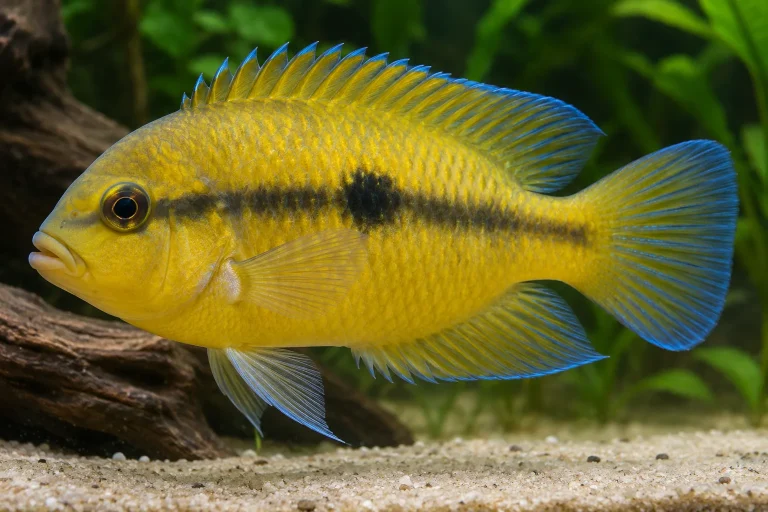
Rainbow Cichlid
Herotilapia multispinosa
- Care level
- Intermediate
- Adult size
- 10–17 cm
- Minimum tank
- 180 litres
- Temperature
- 23–30 °C
Species profile
Parachromis managuensis
Common names: Jaguar Cichlid, Managuense Cichlid, Guapote Tigre
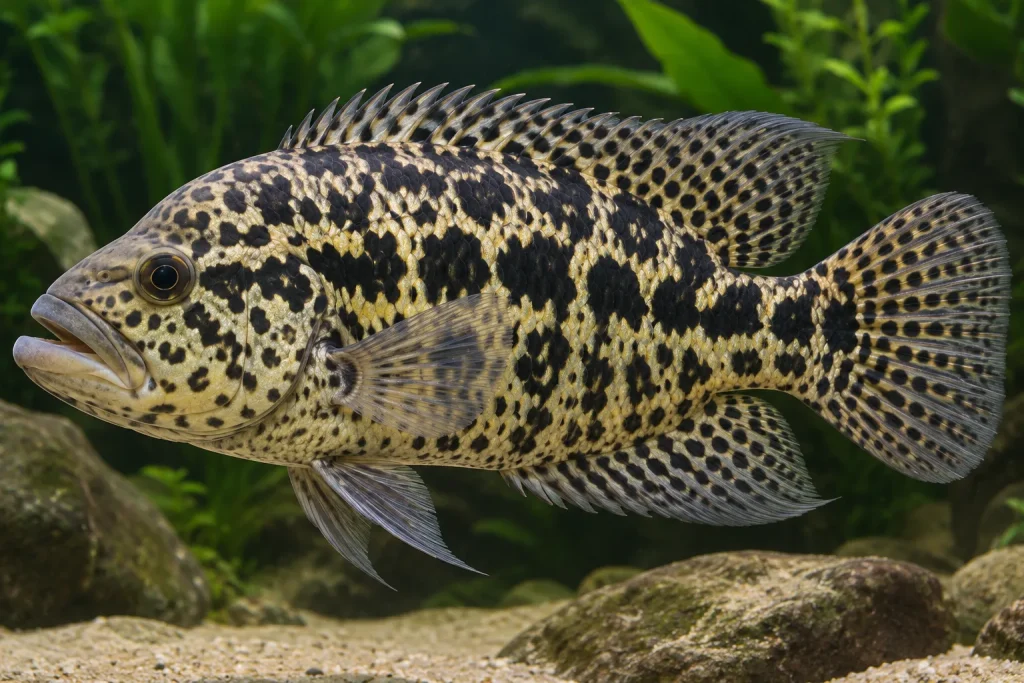
Up to 55 cm
Typical adult length 30–55 cm.




A very large predatory Central American cichlid with jaguar-like spotting. It requires an exceptionally large aquarium, powerful filtration, secure hardscape, and experienced management.
Juveniles show dark bars and blotches that break into irregular black spotting as the fish matures, producing the jaguar-like pattern behind its common name. Adults have a powerful head, large mouth and a pale silver, cream or golden background.
The very large mouth, projecting lower jaw, enlarged canine teeth, black spotting on body and fins, and row of irregular lateral blotches distinguish adults. Do not confuse juveniles with other Parachromis species or hybrid guapotes.
Adult males are generally much larger, heavier-headed and longer-finned than females, with more extensive spotting and a more elongated profile. Females stay smaller and rounder, but young fish are difficult to sex reliably.
This very large predatory cichlid needs an aquarium built around adult size rather than juvenile size, with powerful filtration, high oxygen levels and wide open swimming space. Use large, stable wood or rocks, protect equipment and keep a secure lid because the fish is strong and may rearrange its surroundings.
The Jaguar Cichlid is confident, predatory and strongly territorial. Aggression varies by individual but normally increases with maturity and breeding, and an established adult can dominate an aquarium that once appeared spacious.
Usually kept singly. A bonded pair can be maintained only in a very large dedicated setup with a divider available. Unproven adult pairs should not be placed together without close supervision.
Adults defend large areas. Breeding pairs become extremely aggressive and may treat the entire aquarium as their territory.
A single specimen or established pair in a dedicated setup is the safest plan. Mixing it with other fish is limited to exceptionally large aquariums and large, robust species, with barriers and immediate separation available; smaller fish are likely to be hunted or badly harassed.
Wild records include warm, mineral-rich water. Aquarium temperatures near the lower-middle part of the natural range are safer for long-term oxygen availability than maintaining the extreme recorded maximum.
Some links may earn us a commission on qualifying purchases, at no extra cost to you. Check suitability, price and availability with the seller. How affiliate links work
 Manual aquarium siphon and gravel cleaner
A manual siphon for routine aquarium water changes and accessible waste removal. The seller lists a hose approximately 1.6 m long.
Control the flow and keep the intake clear of fish and delicate planting. Clean the areas appropriate for your substrate and layout rather than disturbing the entire planted bed.
 Dr. Tank tap-water conditioner – 250 ml
A tap-water conditioner option for the moderately mineralised water described in this profile. The seller states that it treats chlorine/chloramine and contains added minerals.
Use the current label instructions for the water being treated. Check the formulation against your water and stocking; this mineral-containing product is not automatically recommended for very soft-water setups.
Base the diet on substantial carnivore or cichlid pellets, supplemented with varied aquatic invertebrate foods such as shrimp, mussel and insect-based foods. Avoid routine use of feeder fish because they can introduce disease and do not provide a balanced staple diet.
Avoid feeder fish because they can introduce disease and do not provide a balanced diet. Avoid mammalian meat. Feed adults controlled portions to prevent obesity and water-quality problems.
A compatible pair cleans a rock, solid surface or excavated site and provides strong biparental care. Spawning itself is often straightforward, but managing pair aggression, protecting other fish and raising a large number of fast-growing juveniles makes the full breeding project demanding.
You can write a note about what worked for you, or send a photograph. We check everything before it appears here.
Herotilapia multispinosa
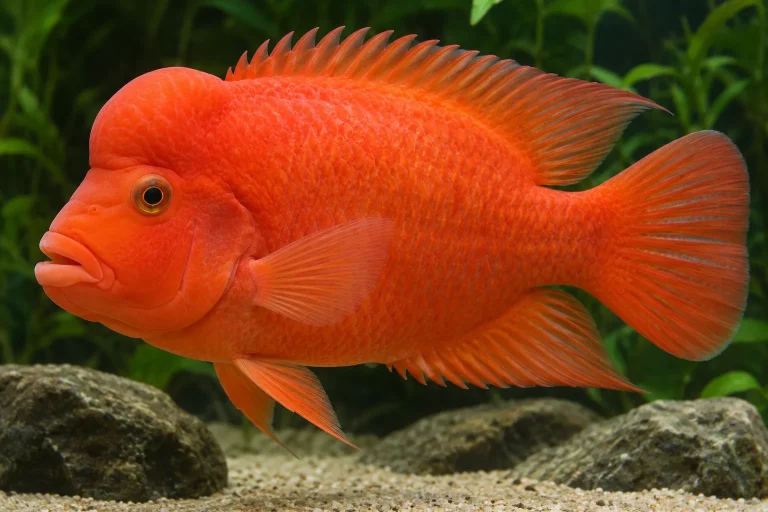
Amphilophus labiatus
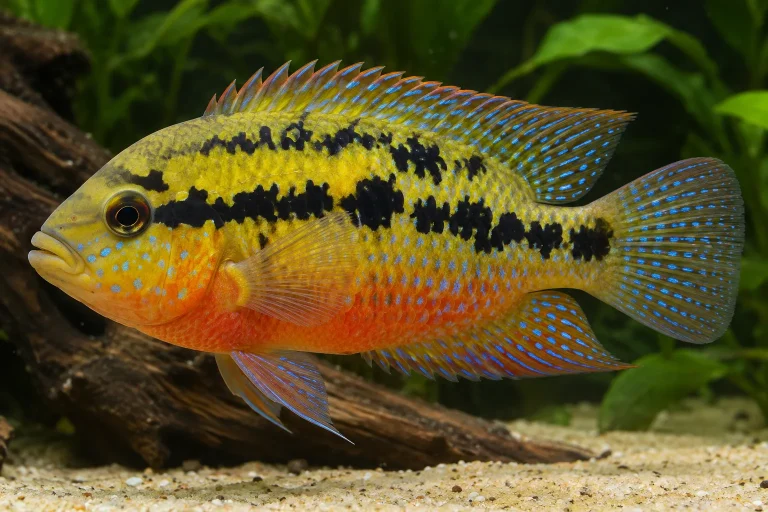
Trichromis salvini
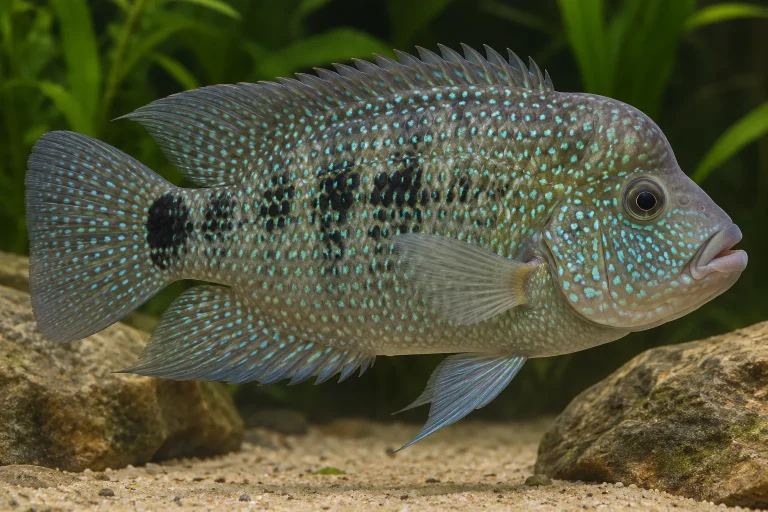
Herichthys cyanoguttatus