
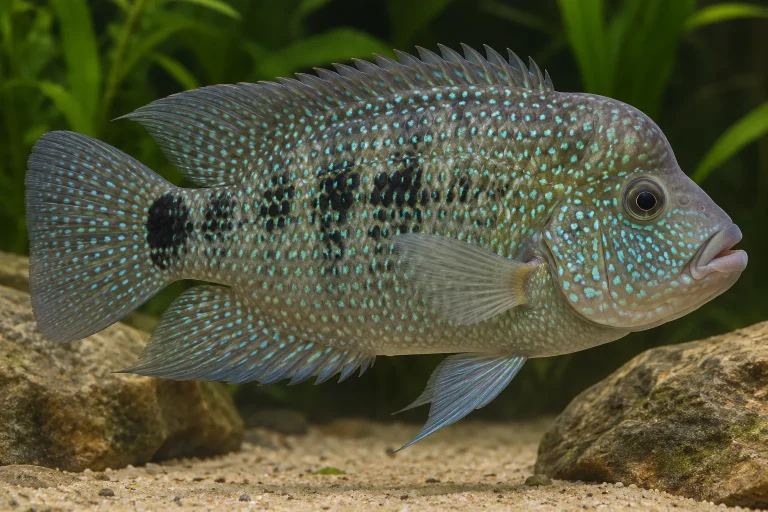
Texas Cichlid
Herichthys cyanoguttatus
- Care level
- Advanced
- Adult size
- 20–30 cm
- Minimum tank
- 300 litres
- Temperature
- 20–30 °C
Species profile
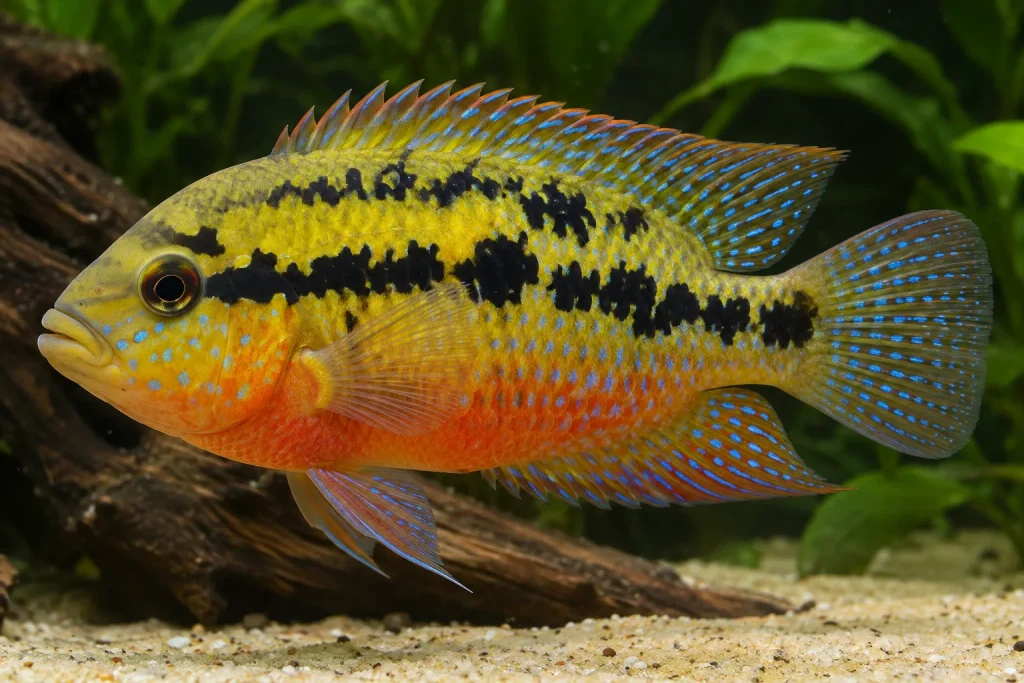
Trichromis salvini
Common names: Salvini Cichlid, Yellow Belly Cichlid, Salvin’s Cichlid
Up to 22 cm
Typical adult length 15–22 cm.



A brilliantly coloured but aggressive river cichlid from southern Mexico, Guatemala, and Belize. The accepted name is Trichromis salvini.
The Salvini Cichlid has a bright yellow to yellow-green body crossed by two broken black lateral bands, with blue spangling and red or orange along the belly. Colour intensifies strongly in mature and breeding fish.
Use Trichromis salvini as the accepted name. Its yellow body, red belly, blue spotting, and paired dark lateral pattern are distinctive. Confirm provenance because Central American cichlid hybrids can imitate parts of the pattern.
Males normally grow larger and develop longer, pointed dorsal and anal fins. Females are often more intensely yellow and red, and commonly show a dark blotch in the dorsal fin plus a dark mark low on the gill cover, although individual variation means no single mark is infallible.
Provide clean, well-oxygenated water, strong filtration and a layout of sand, rocks, wood, caves and clear visual barriers. Leave open swimming room but create several defensible shelters, since a pair may take control of a broad territory.
Salvinis are alert, predatory and much more aggressive than their moderate adult size suggests. They may appear reserved when young, then become intensely territorial as they mature or form a pair.
Usually maintained singly or as a proven pair. Randomly combining mature fish is risky. A pair needs enough room for retreat and separation.
Adults defend open swimming lanes and spawning sites. Breeding pairs become extremely aggressive and may dominate the whole aquarium.
This is not a normal community cichlid. A single fish or bonded pair is safest, while any mixed setup needs a very large aquarium, equally robust companions and immediate separation options; small, timid and long-finned fish are unsuitable.
The species is associated with neutral to alkaline, moderately mineralised Central American water. Clean, oxygenated water and stable temperature are important.
Some links may earn us a commission on qualifying purchases, at no extra cost to you. Check suitability, price and availability with the seller. How affiliate links work
 Manual aquarium siphon and gravel cleaner
A manual siphon for routine aquarium water changes and accessible waste removal. The seller lists a hose approximately 1.6 m long.
Control the flow and keep the intake clear of fish and delicate planting. Clean the areas appropriate for your substrate and layout rather than disturbing the entire planted bed.
 Dr. Tank tap-water conditioner – 250 ml
A tap-water conditioner option for the moderately mineralised water described in this profile. The seller states that it treats chlorine/chloramine and contains added minerals.
Use the current label instructions for the water being treated. Check the formulation against your water and stocking; this mineral-containing product is not automatically recommended for very soft-water setups.
Feed a varied omnivorous-predatory diet based on quality cichlid pellets, with frozen or fresh crustacean and insect foods plus some plant matter. Avoid depending on a single rich food or live feeder fish.
Do not use feeder fish. Feed controlled portions and include some plant-based ingredients even though the species strongly prefers animal food.
A compatible pair deposits eggs on a cleaned rock, firm surface or sheltered cave and guards the brood together. Breeding can be reliable after a pair forms, but the adults become highly aggressive and need a dedicated territory, with a divider available if pair conflict develops.
You can write a note about what worked for you, or send a photograph. We check everything before it appears here.
Herichthys cyanoguttatus
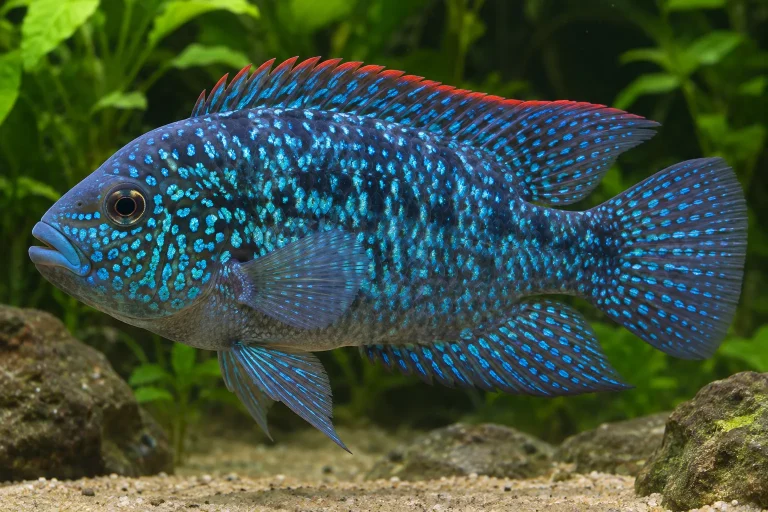
Rocio octofasciata var. "Electric Blue"
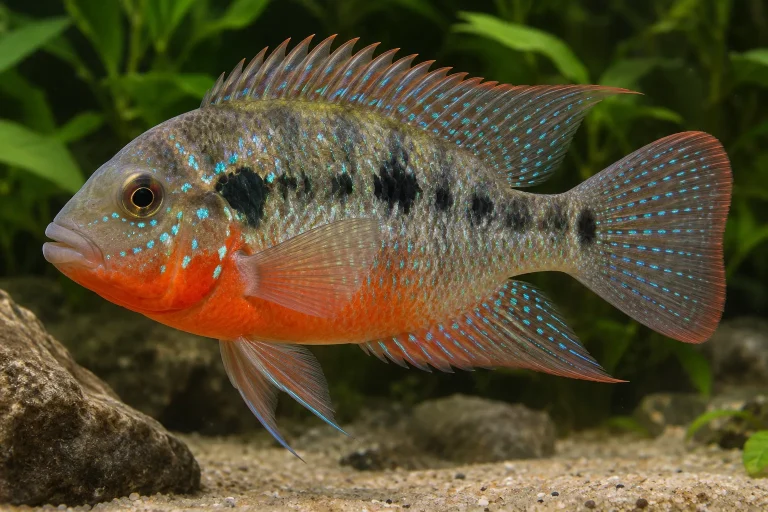
Thorichthys meeki
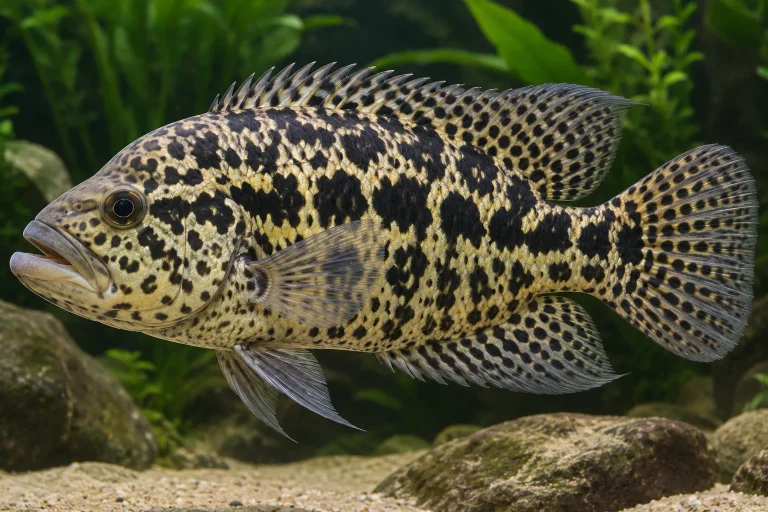
Parachromis managuensis