
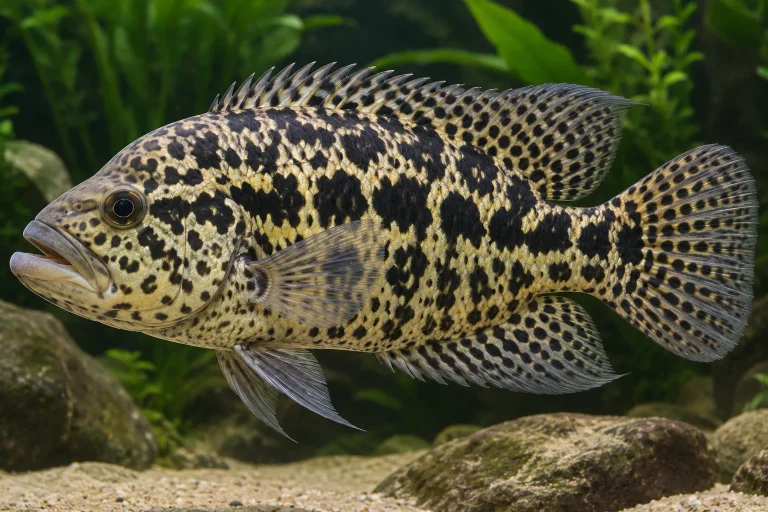
Jaguar Cichlid
Parachromis managuensis
- Care level
- Specialist
- Adult size
- 30–55 cm
- Minimum tank
- 500 litres
- Temperature
- 25–30 °C
Species profile
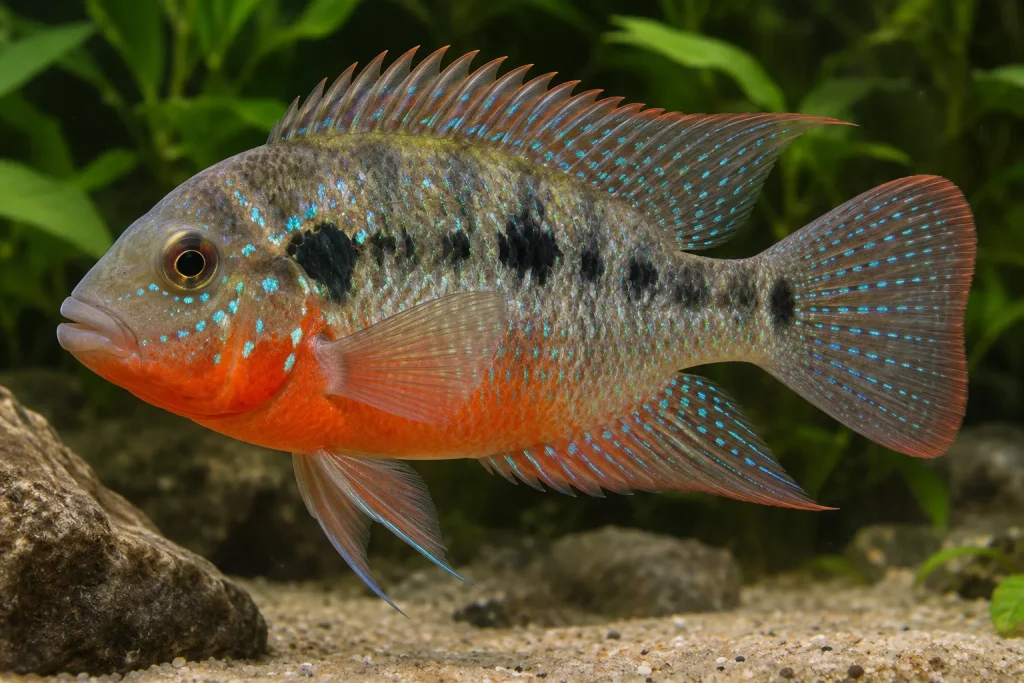
Thorichthys meeki
Common names: Firemouth Cichlid, Redbreasted Cichlid, Firemouth
Up to 17 cm
Typical adult length 12–17 cm.




A medium Central American cichlid known for its red throat display. It is generally manageable outside breeding but needs floor space, visual barriers, and warm clean water.
The Firemouth has a silver-grey to olive body with dark flank markings, blue-green iridescent flecks and a vivid orange-red throat and belly. During display it spreads the gill covers, making the red underside look much larger and more threatening.
The red throat, blue spotting, dark mid-body blotch, and opercular threat display are characteristic. Confirm the longer snout and body pattern to separate it from related Thorichthys species and commercial hybrids.
Mature males are usually larger, more strongly coloured and develop longer, more pointed dorsal and anal fins. Females tend to be smaller and fuller-bodied, but juveniles and non-breeding adults can be difficult to sex with confidence.
Use fine, soft sand because this species searches and sifts through the bottom for food. Add open feeding areas, roots, rocks, caves and broken sight lines, while leaving enough floor space for a pair to defend a breeding territory.
Firemouths are moderate by Central American cichlid standards and often rely on gill flaring and bluff displays. They remain territorial near the bottom, and a breeding pair may become forceful enough to control a large part of the aquarium.
Best maintained as a compatible pair. A group of juveniles can be raised together in a larger aquarium so a pair forms naturally, after which surplus fish should be separated.
Pairs defend a broad bottom territory and use frontal displays, gill flaring, charges, and occasional biting. Breeding adults may attack fish that enter the spawning area.
Suitable companions are calm, sturdy fish of similar size that use the middle or upper levels. Avoid tiny fish, timid bottom dwellers and highly aggressive cichlids, which may either become prey or bully the comparatively restrained Firemouth.
The species tolerates moderately soft to moderately hard water. Stable warm conditions, good oxygenation, and low nitrogen waste matter more than chasing an exact pH.
Some links may earn us a commission on qualifying purchases, at no extra cost to you. Check suitability, price and availability with the seller. How affiliate links work
 Manual aquarium siphon and gravel cleaner
A manual siphon for routine aquarium water changes and accessible waste removal. The seller lists a hose approximately 1.6 m long.
Control the flow and keep the intake clear of fish and delicate planting. Clean the areas appropriate for your substrate and layout rather than disturbing the entire planted bed.
 Dr. Tank tap-water conditioner – 250 ml
A tap-water conditioner option for the moderately mineralised water described in this profile. The seller states that it treats chlorine/chloramine and contains added minerals.
Use the current label instructions for the water being treated. Check the formulation against your water and stocking; this mineral-containing product is not automatically recommended for very soft-water setups.
This benthic omnivore does well on sinking cichlid pellets, small crustaceans, insect larvae and other frozen foods, with regular vegetable or algae-based foods. A varied diet is better than feeding rich meaty foods alone.
Include plant matter and avoid an excessively rich meat-only diet. Feed small portions that are consumed quickly.
Some links may earn us a commission on qualifying purchases, at no extra cost to you. Check suitability, price and availability with the seller. How affiliate links work
 Optimum prepared fish pellets – 1 kg
A prepared-food option for fish whose care information includes appropriately sized pellets. The seller describes pellets around 3 mm across in a 1 kg pack.
Check that your fish can swallow this size and that the product matches their feeding level. It is not a replacement for the variety of foods described above. Check the sealed pack and expiry date.
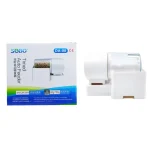 SOBO DA-08 timed dry-food feeder
An optional feeder for fish already eating the dry foods described in this guide. The seller lists flake/granule feeding at 8, 12 or 24 hour intervals and two interchangeable food barrels.
Test portions and reliability while you are at home before relying on it during an absence. It does not dispense the live or frozen foods in the diet. Two AA batteries are required and are not included.
A bonded pair deposits eggs on a cleaned stone, submerged wood or a shallow pit, then both parents guard the clutch. The adults may move newly hatched young into prepared depressions and continue defending them, so breeding is achievable but requires room for the pair’s territory.
You can write a note about what worked for you, or send a photograph. We check everything before it appears here.
Parachromis managuensis
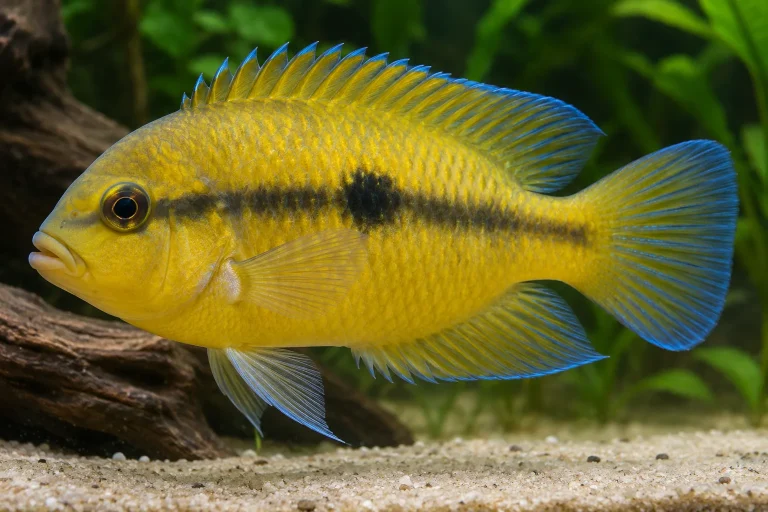
Herotilapia multispinosa
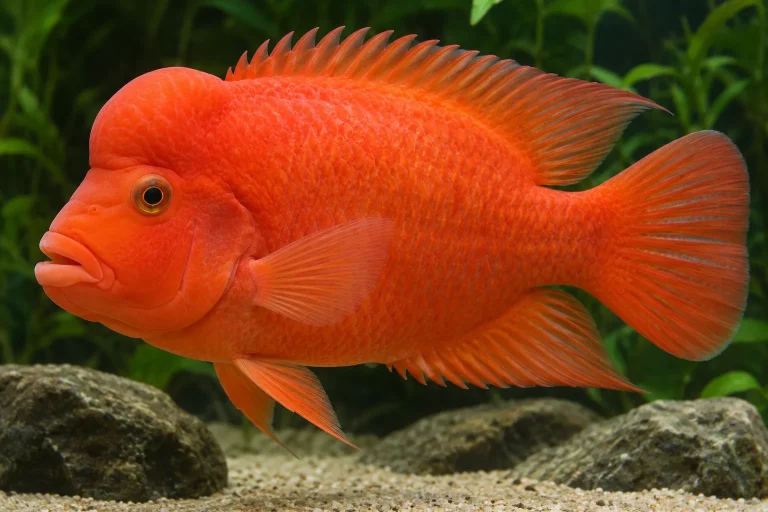
Amphilophus labiatus
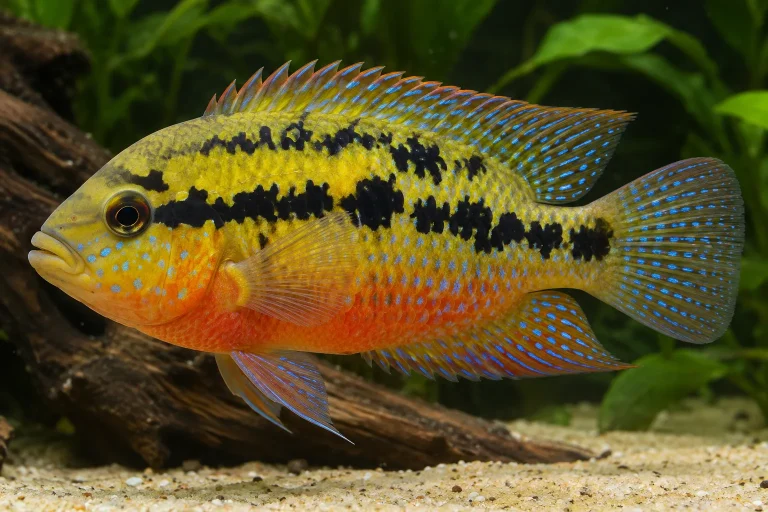
Trichromis salvini