
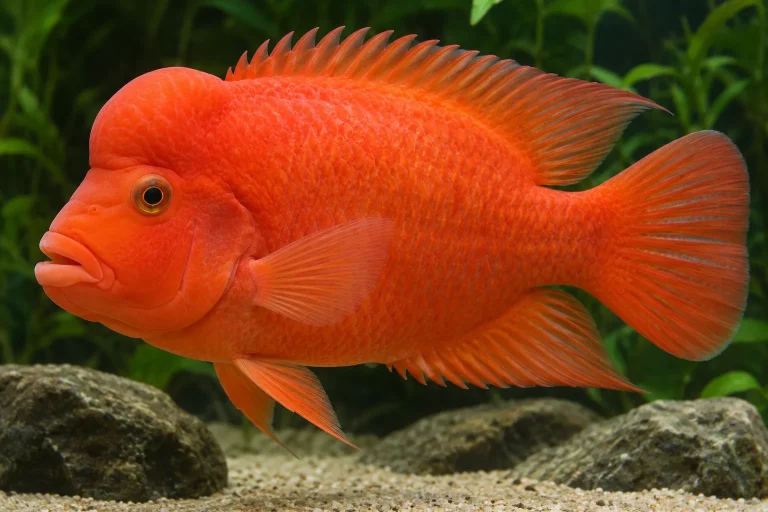
Red Devil Cichlid
Amphilophus labiatus
- Care level
- Specialist
- Adult size
- 24–30 cm
- Minimum tank
- 350 litres
- Temperature
- 26–30 °C
Species profile
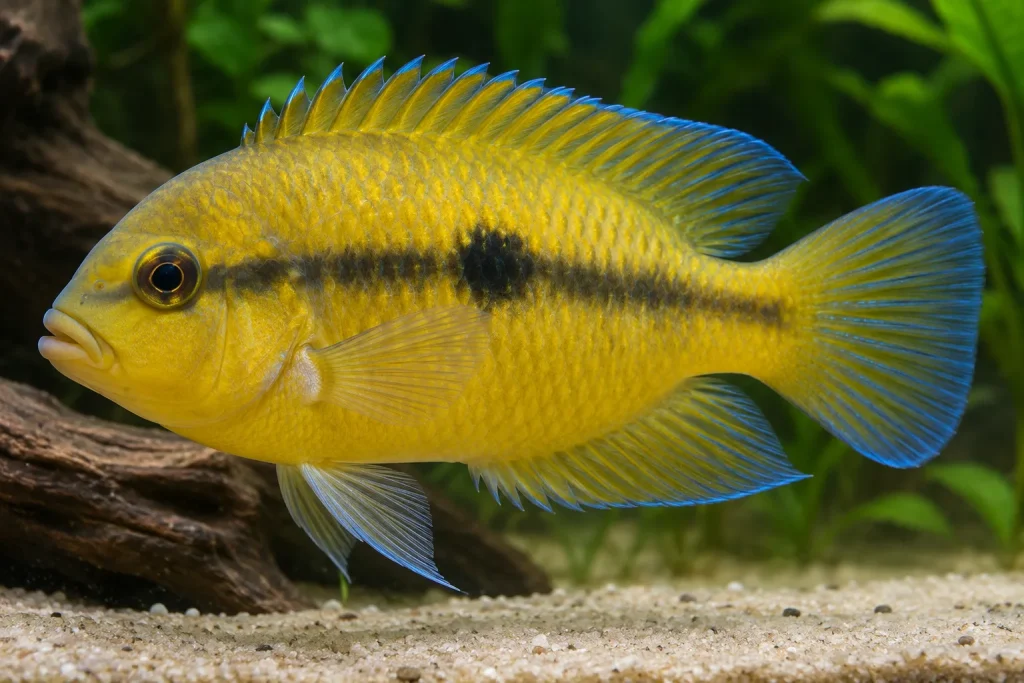
Herotilapia multispinosa
Common names: Rainbow Cichlid, Multispinosa Cichlid
Up to 17 cm
Typical adult length 10–17 cm.



A relatively peaceful, colourful Central American cichlid from lakes and swampy waters. It is an adaptable omnivore that forms pairs and provides parental care.
The Rainbow Cichlid has a deep, oval body that can shift from olive or bronze to bright yellow, gold or orange. A dark horizontal band and central blotch contrast with blue-edged fins, and breeding or defensive fish can darken dramatically.
The combination of variable rainbow colour, blue-green iridescence, dark lateral pattern, and herbivorous scraping dentition helps identify the species. Do not confuse it with colourful convict-cichlid hybrids.
The sexes are similar and young fish are hard to separate. Mature males are usually a little larger with longer, more pointed dorsal and anal fins, while females tend to be rounder and may show stronger dark breeding markings.
Provide sand or fine gravel, open floor space and cover made from wood, rocks and hardy plants. The fish may graze surfaces, dig around a spawning site and disturb delicate planting, so leave clear territories and secure the decor.
This is one of the milder Central American cichlids and is usually curious rather than relentlessly aggressive. It still forms territories, and a bonded pair may drive other fish away when eggs or fry are present.
Best kept as a compatible pair or in a spacious community with robust fish that do not compete aggressively for the same territory.
Both sexes defend the spawning site. The female tends the clutch and young closely, while the male often patrols the outer territory.
It can work with peaceful but sturdy fish of similar size in a roomy aquarium. Avoid tiny fish, ornamental shrimp, slow timid species and aggressive cichlids that may either be eaten, stressed or overpower the Rainbow Cichlid.
The species is tolerant of warm, moderately hard water and can cope with natural seasonal variation, but aquarium conditions should remain clean and stable.
Some links may earn us a commission on qualifying purchases, at no extra cost to you. Check suitability, price and availability with the seller. How affiliate links work
 Manual aquarium siphon and gravel cleaner
A manual siphon for routine aquarium water changes and accessible waste removal. The seller lists a hose approximately 1.6 m long.
Control the flow and keep the intake clear of fish and delicate planting. Clean the areas appropriate for your substrate and layout rather than disturbing the entire planted bed.
 Dr. Tank tap-water conditioner – 250 ml
A tap-water conditioner option for the moderately mineralised water described in this profile. The seller states that it treats chlorine/chloramine and contains added minerals.
Use the current label instructions for the water being treated. Check the formulation against your water and stocking; this mineral-containing product is not automatically recommended for very soft-water setups.
Offer an omnivorous diet with a strong plant and algae component, using quality pellets, spirulina or vegetable foods alongside small invertebrate foods. Its tricuspid teeth suit grazing, so a diet based only on rich animal protein is inappropriate.
Avoid a meat-heavy diet. Plant matter, algae-based foods, and fibre should form a substantial part of routine feeding.
A pair normally cleans a flat stone or another firm surface and guards the eggs together, with the female spending more time close to the clutch and the male defending the area. The parents continue caring for larvae and free-swimming fry, making this a comparatively approachable cichlid to breed once a compatible pair forms.
You can write a note about what worked for you, or send a photograph. We check everything before it appears here.
Amphilophus labiatus
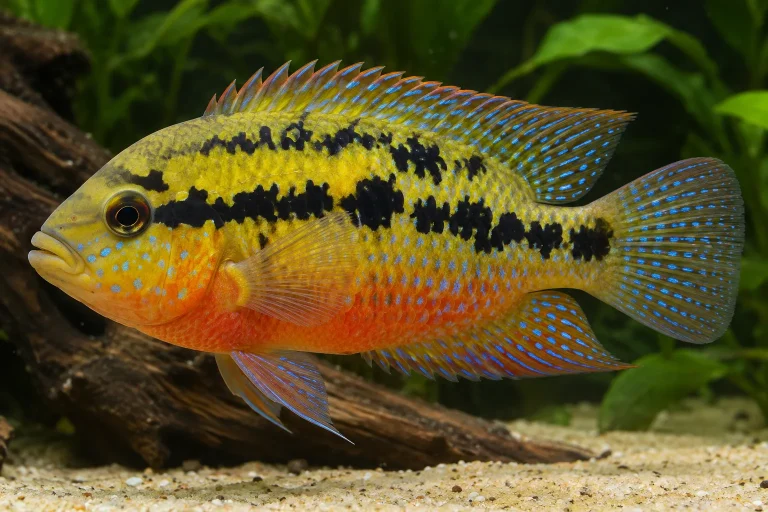
Trichromis salvini
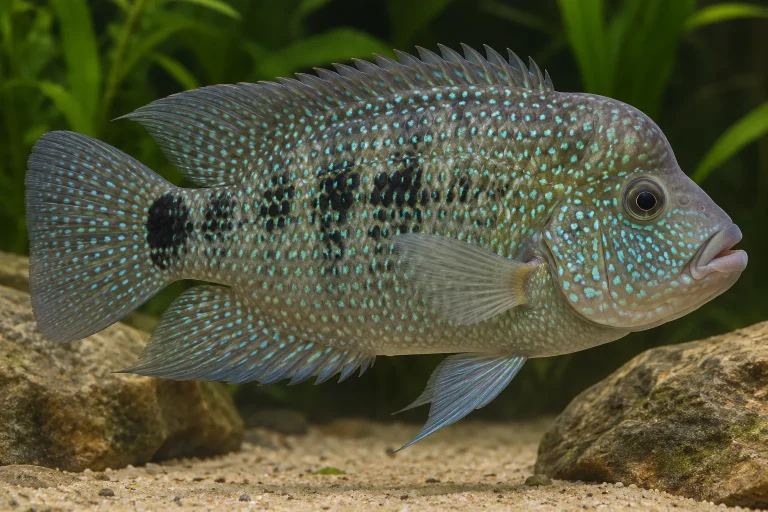
Herichthys cyanoguttatus
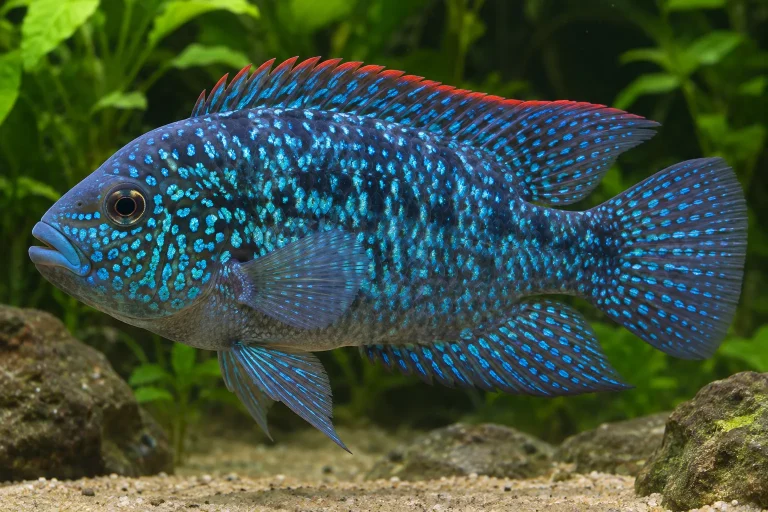
Rocio octofasciata var. "Electric Blue"