
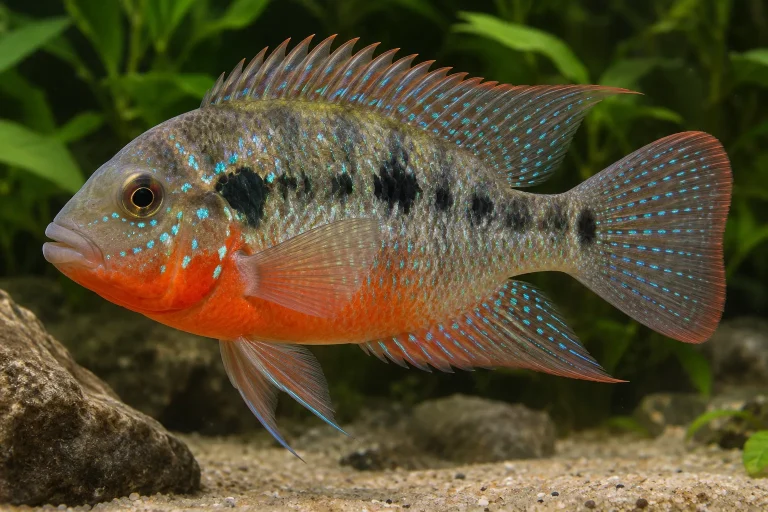
Firemouth Cichlid
Thorichthys meeki
- Care level
- Intermediate
- Adult size
- 12–17 cm
- Minimum tank
- 180 litres
- Temperature
- 24–30 °C
Species profile
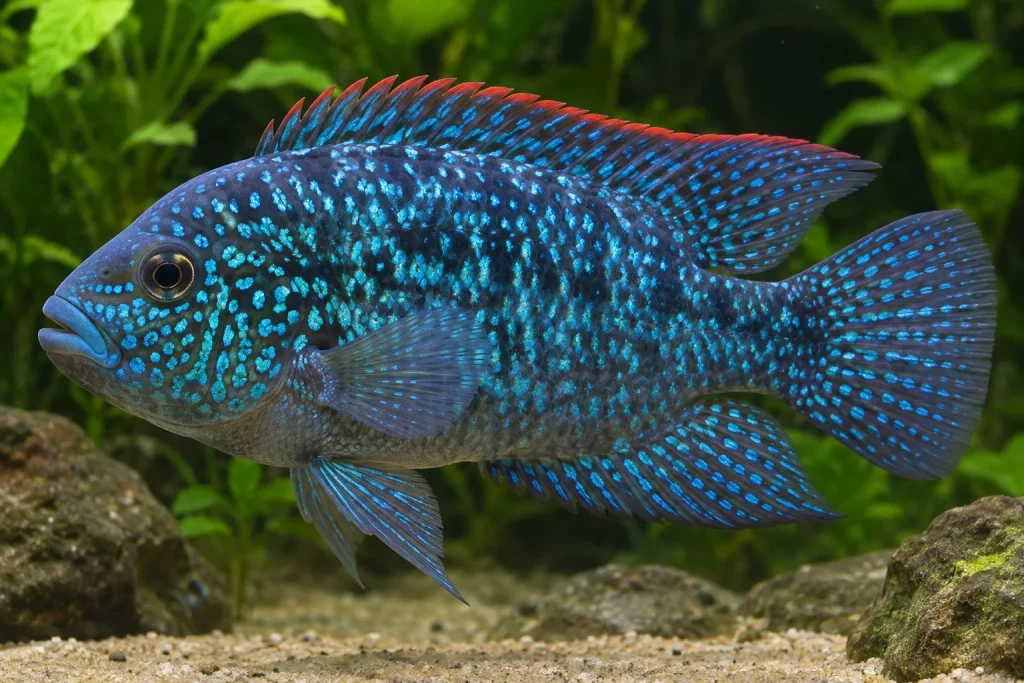
Rocio octofasciata var. "Electric Blue"
Common names: Electric Blue Jack Dempsey, EBJD, Electric Blue Dempsey
Up to 25 cm
Typical adult length 18–25 cm.





A captive-developed blue colour form of the Jack Dempsey cichlid. It needs a large, stable aquarium, robust filtration, sheltered territories, and careful pairing.
A captive blue colour form of the Jack Dempsey, covered with turquoise to electric-blue spangling over a pale silver or darker base. Pattern, brightness and body tone vary between individuals, and juveniles may look less settled than mature fish.
Treat Electric Blue as a captive variety of Rocio octofasciata. It should not be recorded as an undescribed taxon or with “cf.” unless identification is genuinely uncertain. Separate it from blue acara and Texas-cichlid hybrids by body shape, facial pattern, and documented breeding origin.
Visual sexing is unreliable, especially in juveniles and in the electric-blue form. Mature males are usually larger with longer, more pointed dorsal and anal fins, while females may remain rounder and show darker facial or dorsal markings, but venting or an established pair is more dependable.
Provide a mature, stable aquarium with strong biological filtration, good oxygenation, open swimming room and several caves or visual barriers. Use secure rockwork and leave room for digging because the fish may claim and rearrange a territory.
This is a territorial cichlid that is often less forceful than a standard-colour Jack Dempsey but can still chase or injure tank mates. Many juveniles are shy and slow-growing, and weaker specimens may be outcompeted at feeding time.
Usually kept singly or as a proven compatible pair. Randomly combining adults can lead to injury. A pair needs several visual barriers and enough room for either fish to retreat.
Adults defend caves, hardscape, and spawning surfaces. A breeding pair may claim most of the aquarium and attack other bottom or middle-level fish.
Keeping one specimen or a carefully matched pair is usually safest. In a spacious aquarium it may live with calm, robust fish too large to swallow, but tiny fish, fin-nippers, highly aggressive cichlids and very fast feeders are poor choices.
Stable warm water with moderate mineral content suits most captive lines. Ammonia and nitrite must remain at zero, while nitrate should be controlled through filtration and regular water changes.
Some links may earn us a commission on qualifying purchases, at no extra cost to you. Check suitability, price and availability with the seller. How affiliate links work
 Manual aquarium siphon and gravel cleaner
A manual siphon for routine aquarium water changes and accessible waste removal. The seller lists a hose approximately 1.6 m long.
Control the flow and keep the intake clear of fish and delicate planting. Clean the areas appropriate for your substrate and layout rather than disturbing the entire planted bed.
 Dr. Tank tap-water conditioner – 250 ml
A tap-water conditioner option for the moderately mineralised water described in this profile. The seller states that it treats chlorine/chloramine and contains added minerals.
Use the current label instructions for the water being treated. Check the formulation against your water and stocking; this mineral-containing product is not automatically recommended for very soft-water setups.
Use a quality cichlid pellet as the staple, supported by varied frozen or fresh invertebrate foods and some plant-based material. Feed measured portions and confirm that the fish eats, especially when it shares the tank with quicker or bolder species.
Feed moderate portions and avoid chronic overfeeding. Do not rely on feeder fish, mammalian meat, or a single rich frozen food. Include fibre and plant-based ingredients.
A compatible pair spawns on a cleaned rock or inside a sheltered site, and both parents guard the eggs and fry. Breeding the electric-blue form is more difficult than breeding ordinary Jack Dempseys because pair formation, fertility and fry survival can be less reliable; established breeding programmes commonly use blue-gene fish rather than pairing two electric-blue adults.
You can write a note about what worked for you, or send a photograph. We check everything before it appears here.
Thorichthys meeki
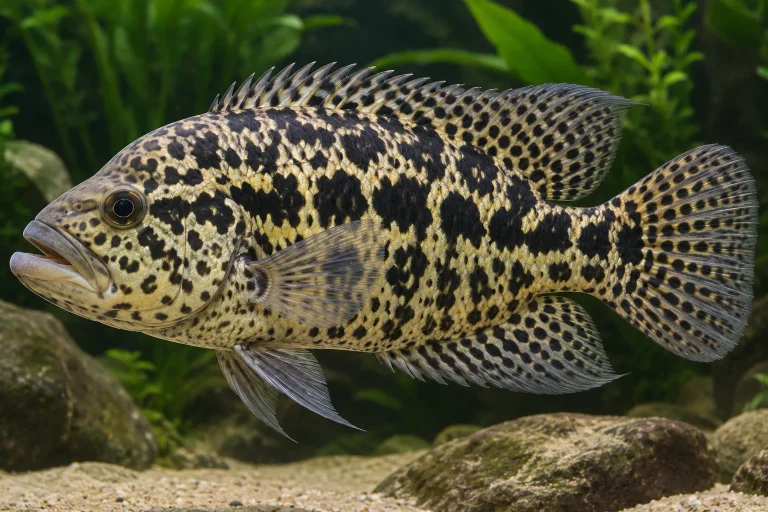
Parachromis managuensis
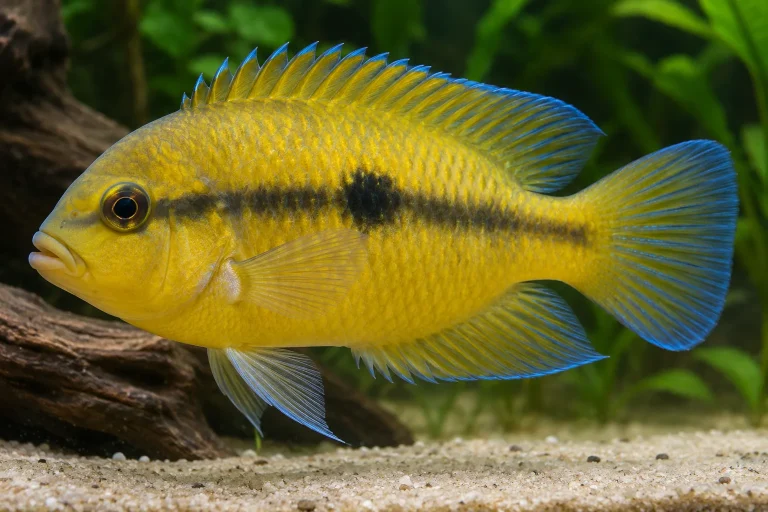
Herotilapia multispinosa
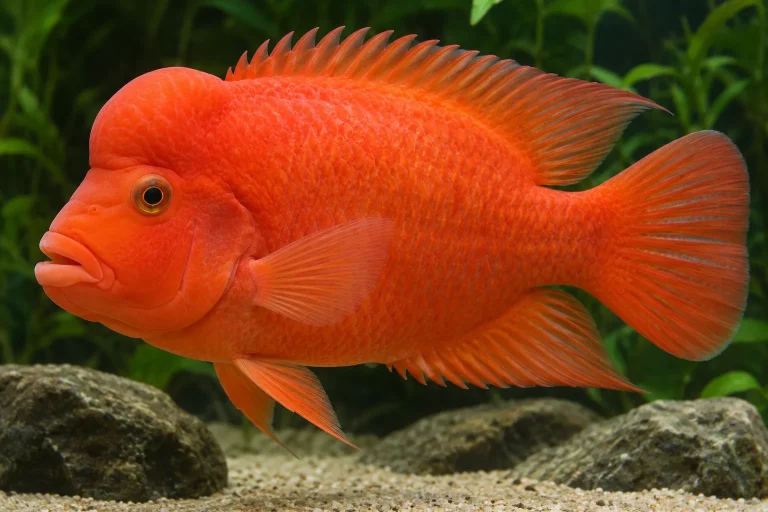
Amphilophus labiatus