
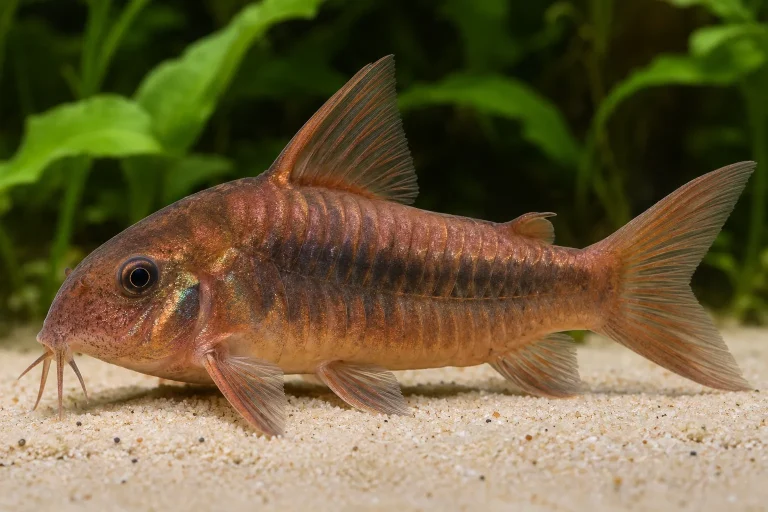
Rusty Corydoras
Osteogaster rabauti
- Care level
- Intermediate
- Adult size
- 4–5.5 cm
- Minimum tank
- 75 litres
- Temperature
- 22–27 °C
Species profile
Hoplisoma rikbaktsa
Common names: Rikbaktsa Corydoras, Rikbaktsa Cory, Rikbaktsa Catfish
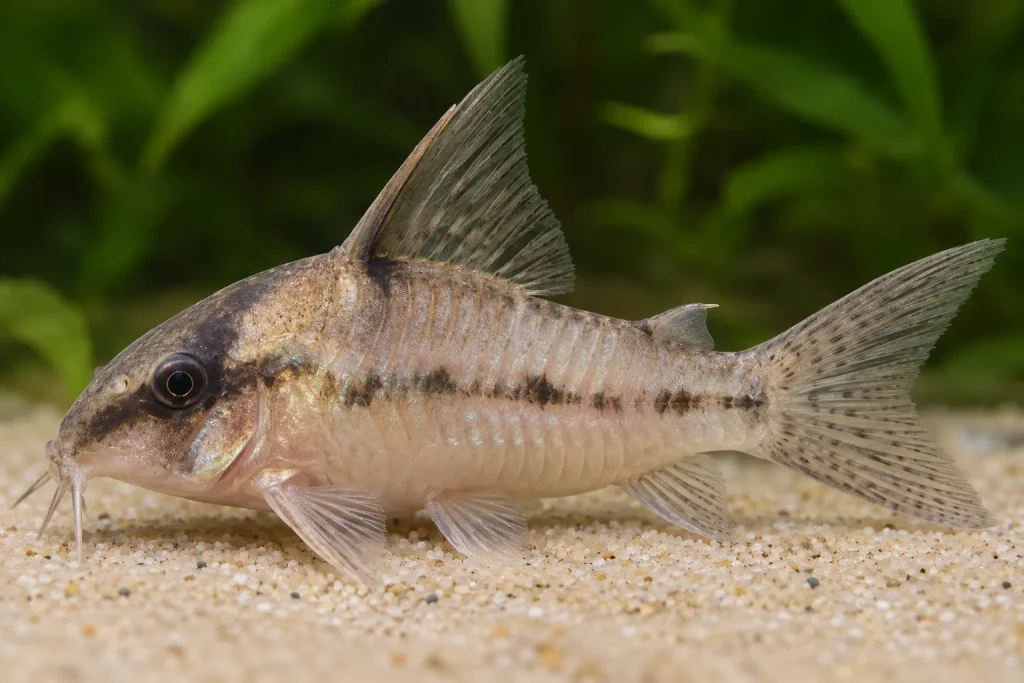
Up to 5 cm
Typical adult length 3.5–5 cm.


Rikbaktsa Corydoras is a peaceful South American callichthyid catfish recognised by a compact pale body patterned with a dark mask and distinct flank blotches or spots. It should be kept in a same-species group over fine sand in clean, oxygen-rich freshwater.
This uncommon cory has a pale body with a broad dark mask through the eye. A thin mid-body stripe may be present or broken into a small series of dark blotches, creating noticeable variation between individuals.
Identify this profile by the combination of a compact pale body patterned with a dark mask and distinct flank blotches or spots. Older sources commonly list this fish as Corydoras rikbaktsa; the current profile follows the accepted or revised placement Hoplisoma rikbaktsa. Colour alone can be unreliable in stressed, juvenile, or poorly conditioned fish, so body shape, snout length, fin pattern, and provenance should also be checked.
Mature males develop numerous visible odontodes on the cheeks, sides of the head, pectoral girdle and pectoral spines. Females have far fewer and smaller odontodes, making this one of the more clearly dimorphic short-snouted corys.
Use a mature aquarium with fine sand, excellent water quality, strong oxygenation and a mixture of sheltered and open foraging areas. Its natural association with clear, flowing water supports avoiding stagnant conditions and abrupt changes.
Available aquarium observations indicate a peaceful, social bottom fish that should be maintained in a group. Because the species is still uncommon, keepers should monitor feeding, shyness and group interactions closely rather than assuming every detail matches common corys.
Keep at least 6 of the same species or coded population, with 8 or more preferred where space permits. A mixed collection of single corys does not fully replace a proper same-species group.
It is not territorial. Males may briefly chase one another or follow females during courtship, but sustained aggression is unusual when the group has adequate floor space.
Choose calm, non-aggressive companions with similar environmental needs. Avoid large predators, forceful bottom dwellers and mixed collections where uncertain identification or accidental hybridisation could become concerns.
Some links may earn us a commission on qualifying purchases, at no extra cost to you. Check suitability, price and availability with the seller. How affiliate links work
 Xilong XL-803D canister filter – up to 100 L
An external-filter option for the moderate-flow setup described above. The seller lists a 400 L/h pump and an aquarium capacity of up to 100 litres.
Check the volume of your actual aquarium and the needs of its complete stocking. Use the flow control or spray bar to avoid a concentrated current. A larger tank or a species requiring strong river flow needs a different filter selection.
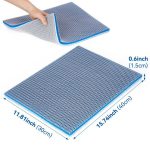 Cut-to-fit aquarium filter media pad
A cut-to-fit pad for compatible filter compartments. The listing describes a sheet approximately 16 by 12 inches; check the offered variant and the space inside your filter.
The seller description varies between five and eight layers, so confirm the actual sheet before ordering. Keep the filter manufacturer’s media arrangement and avoid obstructing the flow.
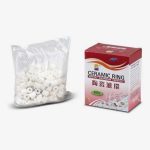 Xinyou ceramic filter rings – 300 g
A biological-media option for a filter with a suitable media basket. This listing is a 300 g pack of ceramic rings.
Check the ring size and available basket space. Installing new media does not make a new aquarium instantly cycled, and these rings do not replace routine water-quality checks.
Soft, mildly acidic water best reflects the natural habitat and usually gives the most reliable breeding results. Stable clean water is more important than forcing an exact pH.
Some links may earn us a commission on qualifying purchases, at no extra cost to you. Check suitability, price and availability with the seller. How affiliate links work
 Manual aquarium siphon and gravel cleaner
A manual siphon for routine aquarium water changes and accessible waste removal. The seller lists a hose approximately 1.6 m long.
Control the flow and keep the intake clear of fish and delicate planting. Clean the areas appropriate for your substrate and layout rather than disturbing the entire planted bed.
Offer varied small sinking pellets, tablets and live or frozen invertebrate foods. Confirm that every specimen feeds after purchase, especially when dealing with recently imported or stressed fish.
Feed after faster surface and midwater fish have taken their share, and confirm that every individual reaches food. Use small portions once or twice daily, remove persistent leftovers, and vary prepared and frozen or live foods.
Captive reproduction is documented, but detailed and repeatable breeding guidance remains limited. Treat it as a specialist project, maintain a mature group in excellent condition and protect any eggs or fry that appear.
You can write a note about what worked for you, or send a photograph. We check everything before it appears here.
Osteogaster rabauti
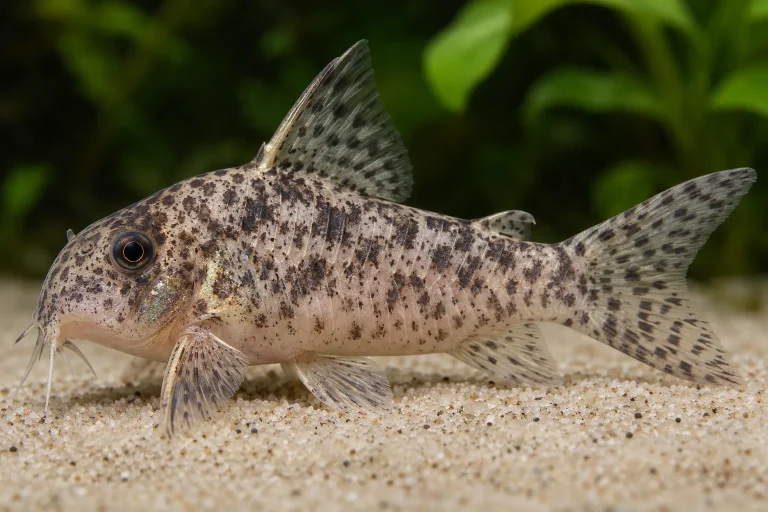
Hoplisoma habrosum
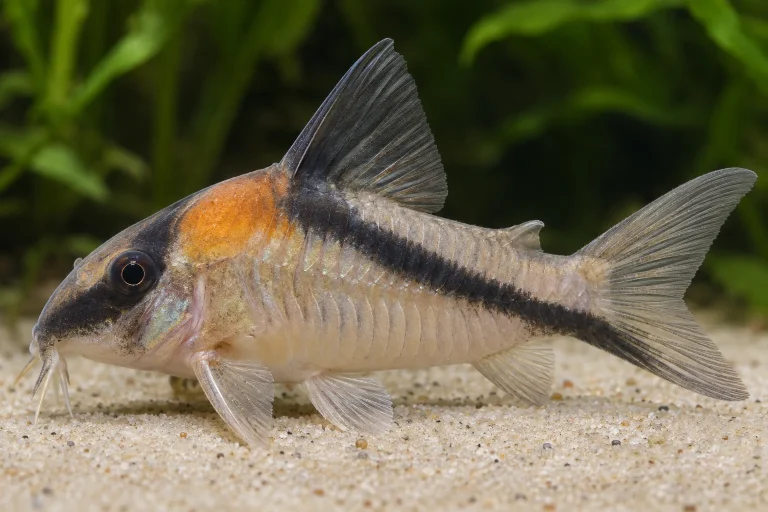
Hoplisoma davidsandsi
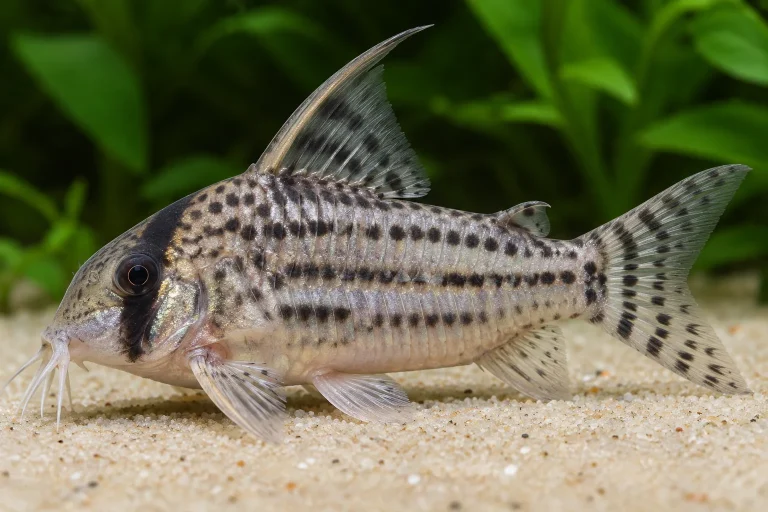
Hoplisoma schwartzi