
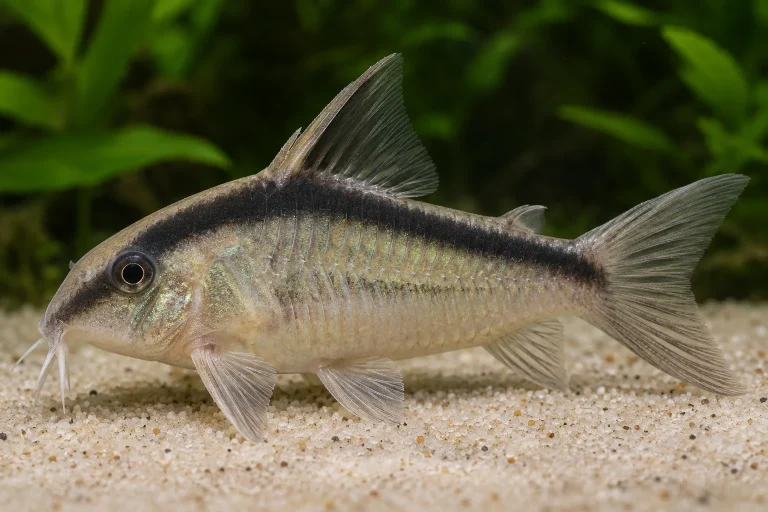
Skunk Corydoras
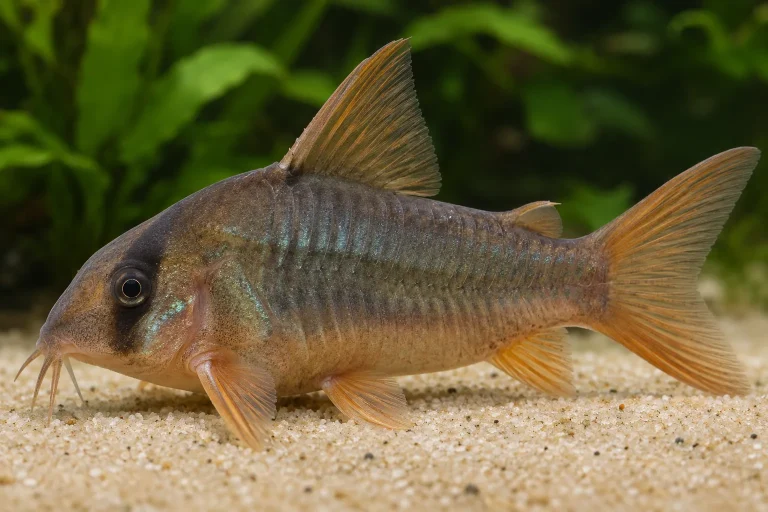
Hoplisoma granti
- Care level
- Advanced
- Adult size
- 4–5.5 cm
- Minimum tank
- 75 litres
- Temperature
- 22–27 °C
Species profile
Gastrodermus pauciradiatus
Common names: Sixray Corydoras, Six-ray Cory, Pauciradiatus Corydoras
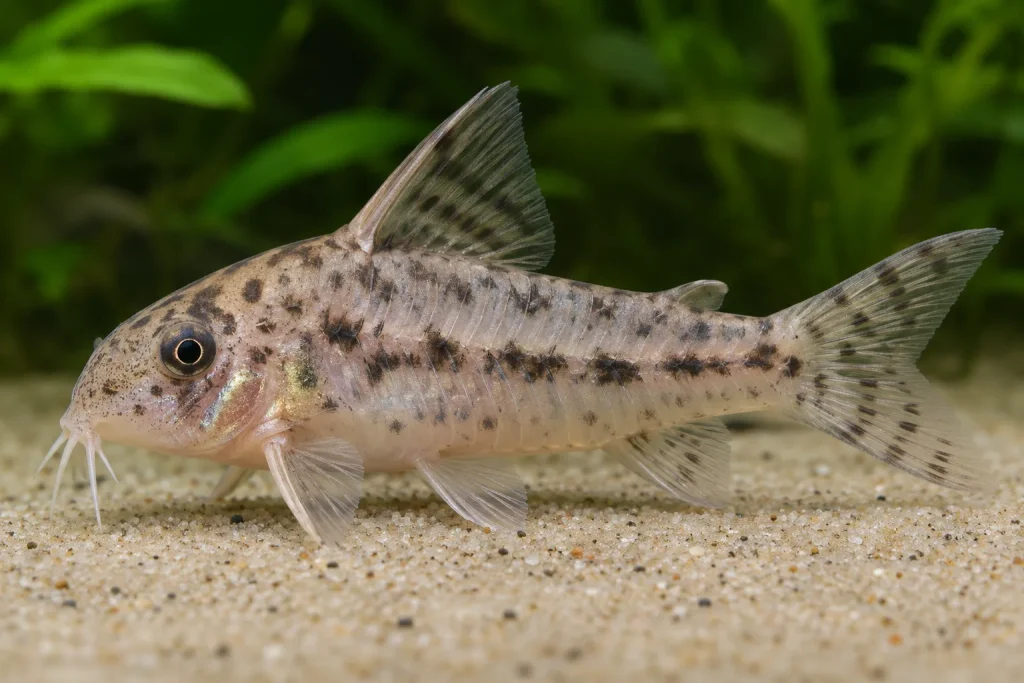
Up to 3.5 cm
Typical adult length 2.5–3.5 cm.

Sixray Corydoras is a peaceful South American callichthyid catfish recognised by a very small delicate body with fine spotting and the reduced dorsal-ray count reflected in its common name. It should be kept in a same-species group over fine sand in clean, oxygen-rich freshwater.
This tiny, lightly built cory relative has a pale body with scattered dark markings and a darker line or blotches along the flank. Its delicate shape and reduced dorsal-fin ray count distinguish it from most commonly sold corys.
Identify this profile by the combination of a very small delicate body with fine spotting and the reduced dorsal-ray count reflected in its common name. Older sources commonly list this fish as Aspidoras pauciradiatus; the current profile follows the accepted or revised placement Gastrodermus pauciradiatus. Colour alone can be unreliable in stressed, juvenile, or poorly conditioned fish, so body shape, snout length, fin pattern, and provenance should also be checked.
Mature females are larger and fuller through the abdomen when viewed from above. Males remain slimmer and may develop more pointed fins, but juveniles are not reliably sexed.
Provide fine sand, dense low cover, open feeding areas and strong oxygenation without creating unsafe suction. This small species benefits from a mature aquarium and clean, moving water rather than a newly established nano tank.
Sixray Corydoras are peaceful, social and active in a group. They may use both the bottom and lower water column, but their small size makes them cautious around large or fast-moving fish.
Keep at least 10 of the same species or coded population, with 12 or more preferred where space permits. A mixed collection of single corys does not fully replace a proper same-species group.
It is not territorial. Males may briefly chase one another or follow females during courtship, but sustained aggression is unusual when the group has adequate floor space.
Choose calm nano fish and other gentle species that cannot eat or intimidate them. Avoid large fish, aggressive bottom dwellers and heavy feeding competition.
Soft to moderately hard, slightly acidic to neutral water is suitable. Provide good oxygenation and keep ammonia and nitrite at zero.
Some links may earn us a commission on qualifying purchases, at no extra cost to you. Check suitability, price and availability with the seller. How affiliate links work
 Manual aquarium siphon and gravel cleaner
A manual siphon for routine aquarium water changes and accessible waste removal. The seller lists a hose approximately 1.6 m long.
Control the flow and keep the intake clear of fish and delicate planting. Clean the areas appropriate for your substrate and layout rather than disturbing the entire planted bed.
Offer very small sinking granules, powdered or gel foods and suitably sized live or frozen foods. Confirm that food reaches the group because ordinary catfish tablets may be too large unless broken apart.
Feed after faster surface and midwater fish have taken their share, and confirm that every individual reaches food. Use small portions once or twice daily, remove persistent leftovers, and vary prepared and frozen or live foods.
The species has been bred in aquariums. Spawning follows the cory pattern, with small adhesive eggs deposited on plants, glass or decor; the adults should be removed or the eggs protected, and the tiny fry need fine first foods.
You can write a note about what worked for you, or send a photograph. We check everything before it appears here.
Hoplisoma granti
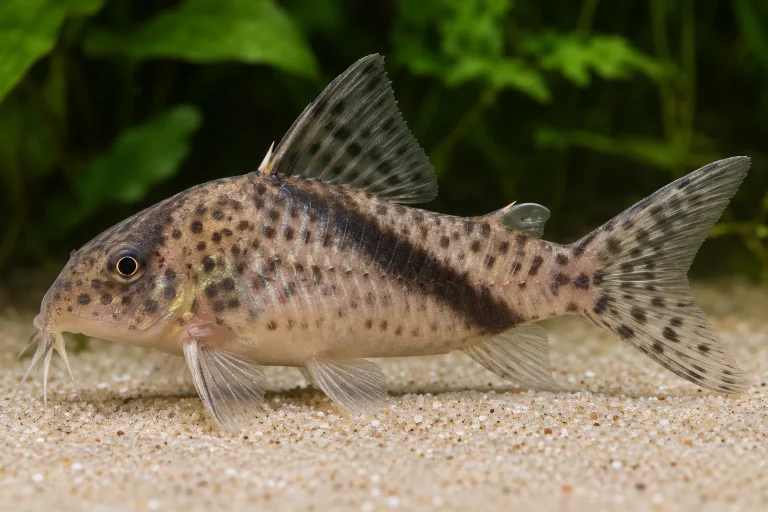
Hoplisoma loxozonum
Hoplisoma concolor

Corydoras similis