
Care Guide
Corydoras Care Guide
Corydoras are small, peaceful armoured catfish that live in groups and spend their day sifting the bottom for food. Keep at least six of one species over sand or smooth fine gravel, give them clean, well-oxygenated water, and feed sinking food that actually reaches them rather than relying on leftovers.
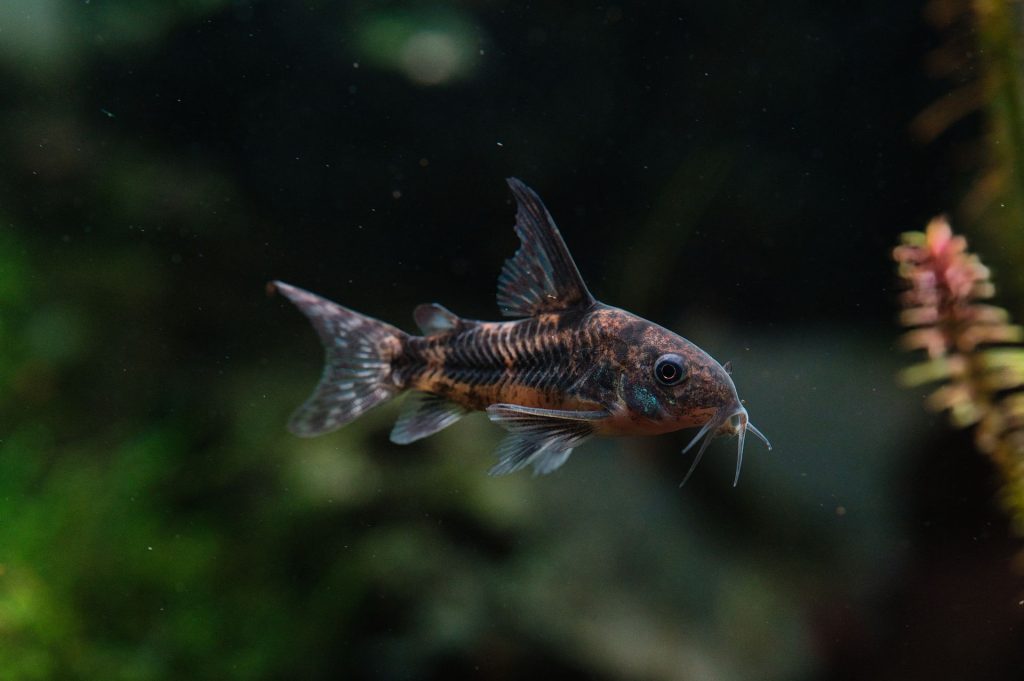
Understanding Corydoras Catfish
Corydoras belong to the family Callichthyidae and come from rivers, streams and flooded forest across South America. Most species kept in aquariums reach 3 to 7 cm. They are covered in bony plates rather than scales, carry sharp locking spines in their dorsal and pectoral fins, and use the sensitive barbels around their mouth to find food in the substrate.
They are active during the day, especially around feeding time, and often rest together in a loose group. Many species live for 5 to 10 years with good care, and some longer, so they are a long-term commitment rather than a short-lived clean-up fish.
Tank Size, Substrate, and Layout
Bottom area matters more than height. A tank at least 60 cm long suits the small species, such as pygmy, habrosus and panda Corydoras, while bronze, peppered and sterbai Corydoras do better in 75 to 90 cm. Long, low tanks give a group room to forage together.
Use soft sand or smooth, rounded fine gravel. Corydoras push their snouts into the substrate, and sharp or dirty gravel is linked to worn, shortened barbels. Leave open sandy areas for feeding, and add plants, wood and leaf litter to create shade and resting places.
Water Quality and Temperature
Most Corydoras do well between 22 and 26 °C with a pH of about 6.0 to 7.5 and soft to moderately hard water. Some species differ: peppered and bronze Corydoras tolerate cooler water, and sterbai Corydoras prefer 24 to 28 °C, so check the needs of your species before choosing tank mates.
Because they live on the bottom, they meet waste first. Keep ammonia and nitrite at zero, nitrate low, and vacuum the open sand lightly during water changes. Corydoras occasionally dash to the surface to gulp air, which is normal; frequent dashing, rapid gill movement or lethargy points to poor oxygen or water quality.
Group Size and Social Behavior
Corydoras are shoaling fish and are noticeably bolder and more active in a group. Keep at least six of the same species, and more if space allows. Mixed groups of single fish from different species often stay nervous, because each species tends to stick with its own kind.
They are peaceful with each other. Males chasing females in short bursts before spawning is normal behaviour, not aggression.
Feeding Corydoras Properly
Corydoras are omnivores that feed mainly on small invertebrates and organic material on the bottom. Offer a quality sinking pellet or wafer as the staple, and add frozen or live bloodworm, daphnia, brine shrimp or tubifex-type foods a few times a week.
They are not cleaners that can live on leftovers. Fast midwater fish often eat everything before it sinks, so drop food where the group gathers, feed shortly after the lights go out, or feed the top of the tank first. Feed once or twice a day what the group clears within a few minutes.
Choosing Compatible Tank Mates
Good partners are peaceful fish that use the middle and upper water, such as small tetras, rasboras, pencilfish, hatchetfish, dwarf gouramis and most livebearers. Otocinclus, kuhli loaches and bristlenose plecos usually share the bottom without trouble if there is enough space.
Avoid fish large enough to swallow them, aggressive cichlids, and territorial bottom fish that guard the whole floor. A fish that tries to eat a Corydoras can choke on its locked fin spines.
Health, Maintenance, and Common Problems
Watch the barbels, gills, belly and fins. Short or reddened barbels usually point to dirty or sharp substrate. Red gills, clamped fins, a hollow belly or a group that stops foraging are signs to test the water and check feeding.
Quarantine new fish for a few weeks, as wild-caught imports can carry parasites. When stressed, Corydoras can release a substance from their skin that is harmful to themselves in a small volume of water, so bag them with plenty of water during transport. Avoid copper-based medicines unless the label says they are safe for catfish.
Frequently Asked Questions
How Many Corydoras Should Be Kept Together?
Keep at least six of the same species. A larger group of eight to ten is better in a tank with enough floor space, and the fish will be more confident and active.
Do Corydoras Need Sand?
Sand is ideal because they sift it naturally, but smooth, rounded fine gravel also works. Avoid sharp or coarse gravel that traps waste, as it is linked to worn barbels.
What Do Corydoras Eat?
Feed a quality sinking pellet or wafer as the staple, with frozen or live bloodworm, daphnia and brine shrimp a few times a week. Make sure the food reaches the bottom before faster fish eat it.
Can Corydoras Live With Shrimp?
Yes. Corydoras are generally safe with adult dwarf shrimp such as Neocaridina and Amano shrimp. They may eat a few very small shrimplets that they find while foraging, so a shrimp breeding tank should have plenty of moss and cover.
Do Corydoras Clean the Aquarium?
Only partly. They eat food that reaches the bottom, but they do not remove waste and cannot live on leftovers. They still need their own food, and the substrate still needs vacuuming.
How Often Should Corydoras Be Fed?
Once or twice a day, giving an amount the group finishes within a few minutes. Many keepers also feed just after lights out, when Corydoras forage confidently and faster fish are less active.
What Are Common Signs of Stress in Corydoras?
Common signs are frequent dashing to the surface, rapid gill movement, clamped fins, pale colour, hiding alone instead of with the group, loss of appetite, and red or worn barbels. Test ammonia, nitrite and nitrate first.
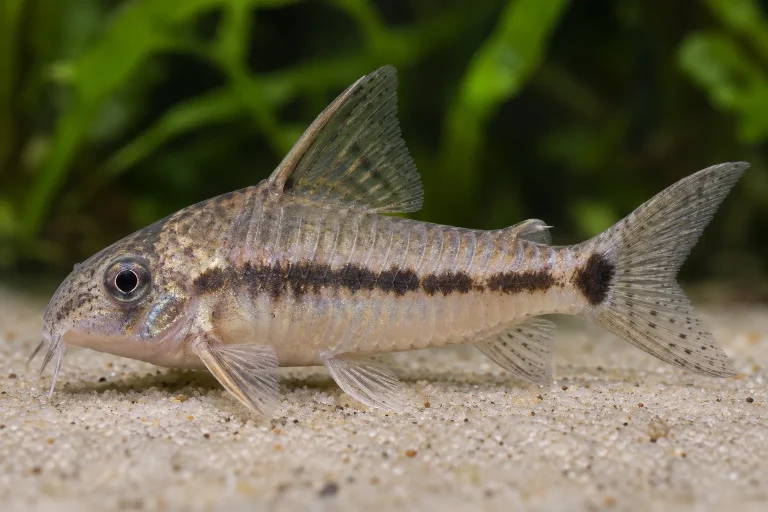
Napo Corydoras
Gastrodermus napoensis
- Care level
- Advanced
- Adult size
- 3–4.5 cm
- Minimum tank
- 60 litres
- Temperature
- 22–27 °C
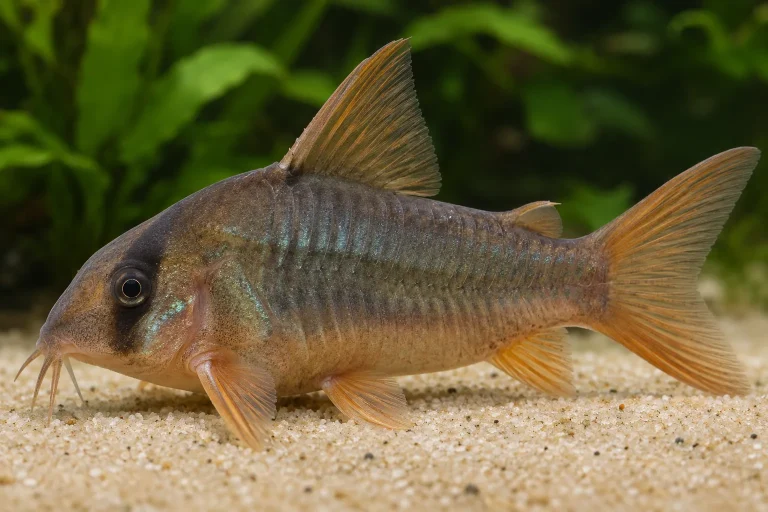
Slate Corydoras
Hoplisoma concolor
- Care level
- Intermediate
- Adult size
- 4.5–6 cm
- Minimum tank
- 75 litres
- Temperature
- 22–27 °C
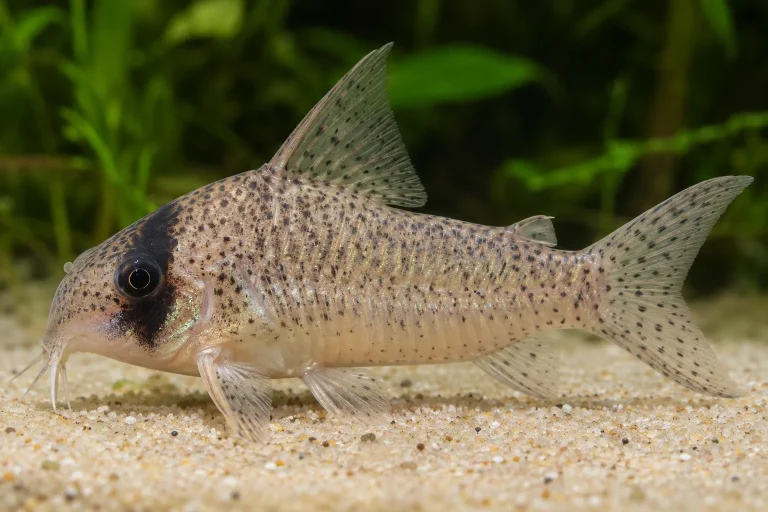
Fairy Corydoras
Hoplisoma atropersonatum
- Care level
- Advanced
- Adult size
- 3.5–5 cm
- Minimum tank
- 60 litres
- Temperature
- 22–27 °C
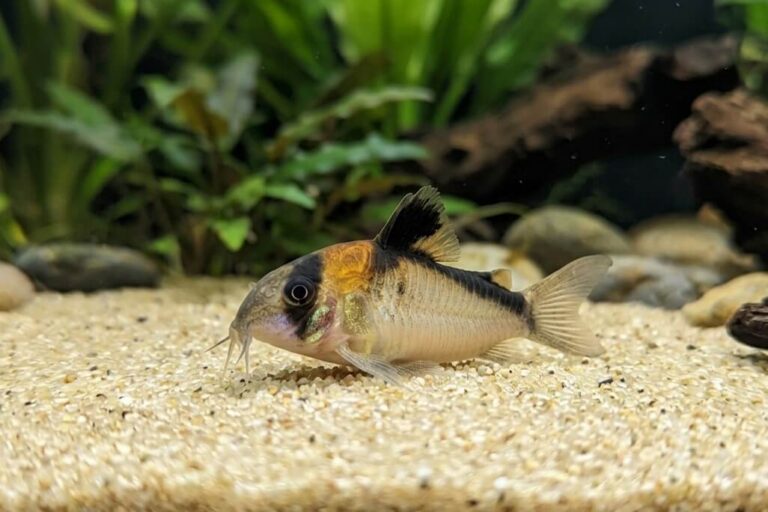
Adolfos Catfish
Hoplisoma adolfoi
- Care level
- Advanced
- Adult size
- 4–5.5 cm
- Minimum tank
- 75 litres
- Temperature
- 22–27 °C