
Care Guide
Angelfish Care Guide
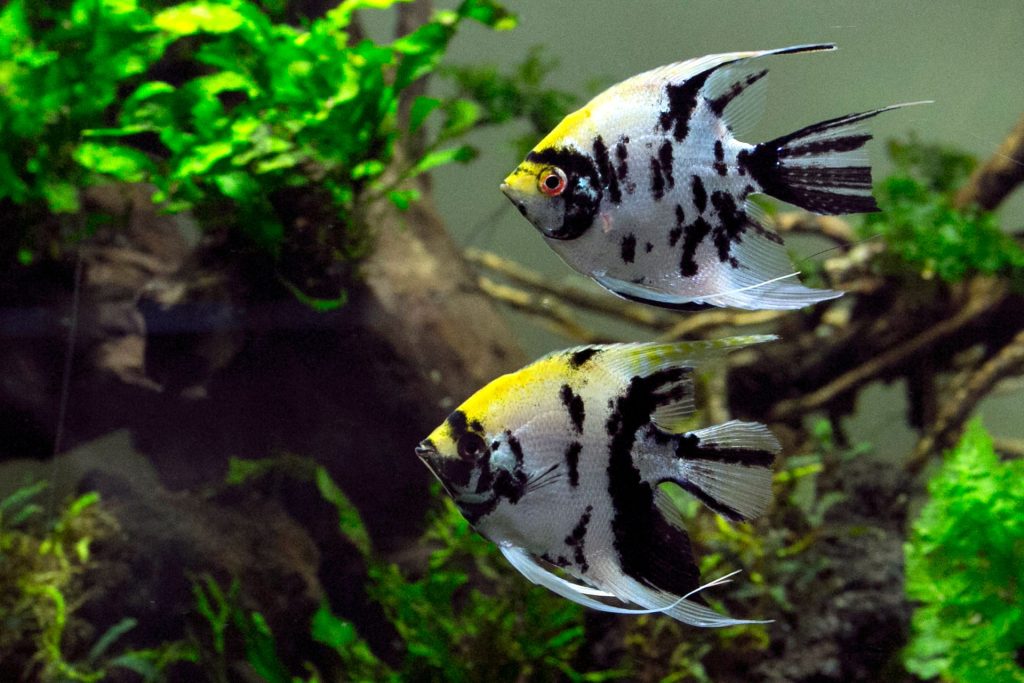
Freshwater angelfish, Pterophyllum scalare and related captive forms, are graceful South American cichlids with tall bodies, long fins, and more personality than their calm appearance may suggest. They can become excellent centerpiece fish, but they are not tiny community fish. Adults need a tall, spacious aquarium, stable warm water, a varied diet, and tank mates that can cope with cichlid behavior.
Juvenile angelfish are often sold at a size that makes small aquariums look adequate. Plan for the adult fish instead. Their body height increases dramatically, pairs may defend breeding territories, and very small fish can become prey. A successful angelfish setup combines vertical swimming room with sensible stocking, structure that breaks sight lines, and a plan for aggression if a pair forms.
Tank Size and Aquascape
Choose an aquarium with substantial height and enough horizontal room for adult fish to establish space. Tank dimensions matter more than a simple volume number because angelfish are unusually tall-bodied.
Use plants, wood, and vertical structure to create visual barriers while leaving open swimming lanes. Broad-leaved plants can also become spawning surfaces.
Avoid sharp decorations that can tear long fins. Keep a secure lid and arrange equipment so fish cannot become trapped behind heaters or intakes.
Adult angelfish need vertical clearance not only for the body but also for extended dorsal, anal, and ventral fins. A shallow aquarium can technically hold the required volume while still providing poor proportions. Length matters too when several fish need to avoid one another. In a group, use tall plants, branching wood, or other safe vertical features to break direct lines of sight, but do not fill every open lane. An angelfish should be able to turn and cruise without dragging fins through sharp decor. Design around the adult silhouette you expect, not the coin-sized juvenile you bring home.
Water Conditions and Filtration
Captive-bred angelfish adapt to a range of freshwater conditions, but stability is essential. Keep temperature appropriate for tropical cichlids and avoid abrupt changes in pH or hardness.
Use filtration that handles the bioload without creating an exhausting current across the entire tank. Angelfish appreciate clean, oxygenated water but are not built like high-current river fish.
Maintain ammonia and nitrite at controlled levels and manage nitrate through water changes, plant growth, and sensible stocking.
Angelfish do not need water that is chemically identical to a wild Amazon tributary if they are generations removed from wild stock, but they do need consistency. Ask what conditions the breeder or store uses and compare them with your source water. If the difference is substantial, acclimate carefully instead of forcing an immediate target. Warm water carries less dissolved oxygen than cooler water, so good gas exchange remains important even when the fish dislike strong current. Position filter returns to create circulation without pinning long-finned fish against one side of the tank.
Feeding Angelfish
Offer a varied high-quality diet built around appropriate prepared foods, supplemented as desired with safe frozen or live foods. Variety helps cover nutritional needs and encourages natural feeding behavior.
Feed portions the fish can consume without large leftovers. Angelfish learn to beg and can appear hungry immediately after eating, so appetite alone is not a portion guide.
Juveniles growing rapidly may need a different feeding schedule from healthy adults. Adjust food to age, body condition, and water-quality capacity.
Watch body shape from above and from the side. A growing juvenile should develop steadily without a hollow abdomen, while an adult should not become thick from constant high-calorie feeding. Rotate quality prepared foods so the diet is not dependent on one frozen treat. If using live foods, obtain them from a safe source because contaminated feeder organisms can introduce disease. In a community, make sure bottom fish still receive their food; angelfish are attentive feeders and may intercept sinking items. Several controlled feedings are easier on water quality than one large meal that scatters behind decor.
Social Behavior and Aggression
Angelfish are cichlids. Juveniles may live peacefully in groups, but social dynamics change as they mature and pairs form. Chasing and territorial defense can become intense in limited space.
Provide visual barriers and watch whether every fish can access food and rest. A fish forced into a corner or kept from feeding needs intervention.
Have a separation plan before aggression becomes severe. Rearranging decor can sometimes disrupt territories, but it is not guaranteed to solve an incompatible pairing.
A group of juveniles can look harmonious for months and then change rapidly when sexual maturity approaches. Watch for one fish being excluded from the group, hiding near the surface, losing weight, or showing damaged fins. Occasional short chases are different from sustained persecution. Adding more angelfish is not a reliable cure for aggression because it also increases competition and bioload. If a pair claims a spawning site, their defended area can occupy a surprising portion of the aquarium. A divider, spare tank, or rehoming plan should exist before you need it urgently.
Choosing Tank Mates
Select peaceful fish large enough not to be viewed as prey and calm enough not to nip long angelfish fins. Avoid very tiny schooling fish if adult angelfish could swallow them.
Bottom dwellers can work when their temperature and chemistry needs overlap and the tank footprint provides enough room. Avoid crowding every swimming zone.
Shrimp, especially small shrimp and shrimplets, are at substantial predation risk. An angelfish community should not be planned as a shrimp breeding tank.
Avoid choosing companions solely from a “community fish” list. Fast fin-nippers can damage angelfish even when they are too small to threaten them physically, while tiny peaceful fish may become prey as the angels mature. Temperature is another filter: some popular Corydoras prefer cooler conditions than a warm angelfish setup, while other species overlap better. Very active fish can also make slow deliberate angelfish compete at meals. A good companion is large enough not to be swallowed, non-nipping, comfortable in similar water, and able to feed without turning the aquarium into a constant chase.
Pairing and Breeding Behavior
A bonded pair may clean a vertical surface and lay rows of eggs. Both parents can guard and fan the clutch, although inexperienced captive pairs sometimes eat eggs or fry.
Breeding dramatically increases territorial behavior. Tank mates that were previously tolerated may be driven away from the spawning site.
If breeding is intentional, a dedicated setup gives the pair and fry more control. Prepare fry foods and grow-out space before producing repeated spawns.
Before spawning, a pair often cleans a broad leaf, slate, filter pipe, or other vertical surface. The female lays adhesive eggs in lines and the male follows to fertilize them. Parents may fan the eggs and remove failed ones, then move wrigglers after hatching. First-time pairs frequently make mistakes, including eating a clutch, and this does not automatically mean something is wrong. If you want to raise fry, plan beyond the eggs: free-swimming fry need suitable first foods, gentle filtration, excellent water quality, and eventually much more grow-out space than the parents require.
Health and Long-Term Care
Observe fins, breathing, appetite, feces, body condition, and social position. Early changes are easier to address than advanced disease.
Quarantine new fish when practical. Many problems blamed on “sensitive angelfish” are actually introduced pathogens, poor acclimation, crowding, or unstable water.
Keep maintenance consistent and avoid large sudden chemistry changes. Healthy adult angelfish can live for years, so plan the aquarium as a long-term home rather than a temporary juvenile display.
Long fins make certain problems easy to see. Clamped fins, ragged edges, white patches, unusual mucus, rapid breathing, or a fish separating from the group should prompt closer observation. Start with water quality and social stress before guessing at a disease from one symptom. Quarantine is especially useful with angelfish because adding one infected fish to an established group can turn treatment into a whole-tank problem. If medication is needed, identify the likely condition and follow a product appropriate to the species and tank inhabitants rather than combining several treatments “just in case.”
Frequently Asked Questions
Are Angelfish Good Beginner Fish?
They can suit an informed beginner with a sufficiently large, tall aquarium and a plan for adult cichlid behavior. Evaluate the adult fish rather than the juvenile sold in stores, and watch whether every individual can eat, rest, and move without sustained harassment. Evaluate the adult fish rather than the juvenile sold in stores, and watch whether every individual can eat, rest, and move without sustained harassment. Evaluate the adult fish rather than the juvenile sold in stores, and watch whether every individual can eat, rest, and move without sustained harassment.
Can Angelfish Live in a Community Tank?
Yes with carefully chosen tank mates, but adults may become territorial, especially when breeding. Evaluate the adult fish rather than the juvenile sold in stores, and watch whether every individual can eat, rest, and move without sustained harassment. Evaluate the adult fish rather than the juvenile sold in stores, and watch whether every individual can eat, rest, and move without sustained harassment. Evaluate the adult fish rather than the juvenile sold in stores, and watch whether every individual can eat, rest, and move without sustained harassment.
Will Angelfish Eat Small Fish?
They can eat fish small enough to fit in their mouths, so very small tank mates are risky. Evaluate the adult fish rather than the juvenile sold in stores, and watch whether every individual can eat, rest, and move without sustained harassment. Evaluate the adult fish rather than the juvenile sold in stores, and watch whether every individual can eat, rest, and move without sustained harassment. Evaluate the adult fish rather than the juvenile sold in stores, and watch whether every individual can eat, rest, and move without sustained harassment.
Can Angelfish Live With Shrimp?
Small shrimp and shrimplets are at high predation risk and are not reliable angelfish tank mates. Evaluate the adult fish rather than the juvenile sold in stores, and watch whether every individual can eat, rest, and move without sustained harassment. Evaluate the adult fish rather than the juvenile sold in stores, and watch whether every individual can eat, rest, and move without sustained harassment. Evaluate the adult fish rather than the juvenile sold in stores, and watch whether every individual can eat, rest, and move without sustained harassment.
Why Are My Angelfish Fighting?
Maturing fish establish social hierarchies and breeding pairs can defend territories. Space and visual barriers matter. Evaluate the adult fish rather than the juvenile sold in stores, and watch whether every individual can eat, rest, and move without sustained harassment. Evaluate the adult fish rather than the juvenile sold in stores, and watch whether every individual can eat, rest, and move without sustained harassment. Evaluate the adult fish rather than the juvenile sold in stores, and watch whether every individual can eat, rest, and move without sustained harassment.
Do Angelfish Need Strong Current?
They need clean oxygenated water but generally do not require a powerful current across the entire tank. Evaluate the adult fish rather than the juvenile sold in stores, and watch whether every individual can eat, rest, and move without sustained harassment. Evaluate the adult fish rather than the juvenile sold in stores, and watch whether every individual can eat, rest, and move without sustained harassment.
How Can I Tell If Angelfish Are Pairing?
A pair may stay close, defend an area, clean a vertical surface, and eventually spawn. Evaluate the adult fish rather than the juvenile sold in stores, and watch whether every individual can eat, rest, and move without sustained harassment. Evaluate the adult fish rather than the juvenile sold in stores, and watch whether every individual can eat, rest, and move without sustained harassment.
Angelfish reward long-term planning. Give adults a tall, spacious aquarium, warm stable water, varied food, and companions that are neither tiny prey nor persistent fin-nippers. Expect social behavior to change as juveniles mature and pairs form, and keep a separation plan for serious aggression. When their adult size and cichlid behavior are planned for from the beginning, angelfish can become impressive centerpiece fish rather than an unexpected stocking problem.
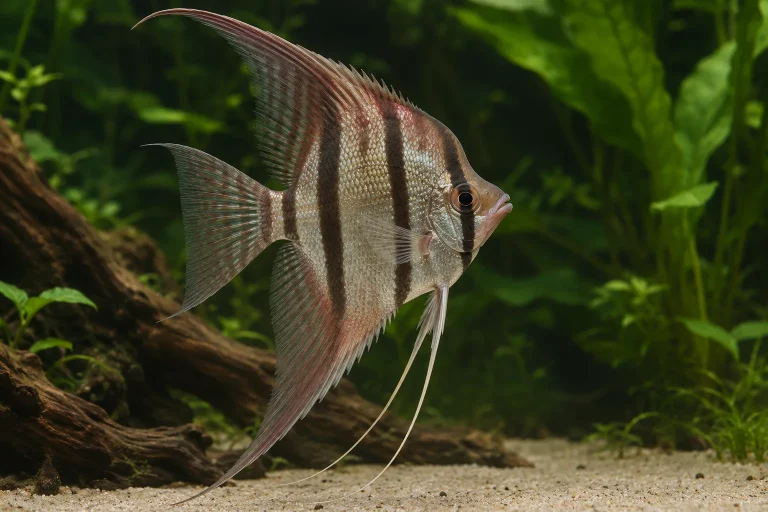
Altum Angelfish
Pterophyllum altum
- Care level
- Advanced
- Adult size
- 18–22 cm
- Minimum tank
- 400 litres
- Temperature
- 27–31 °C
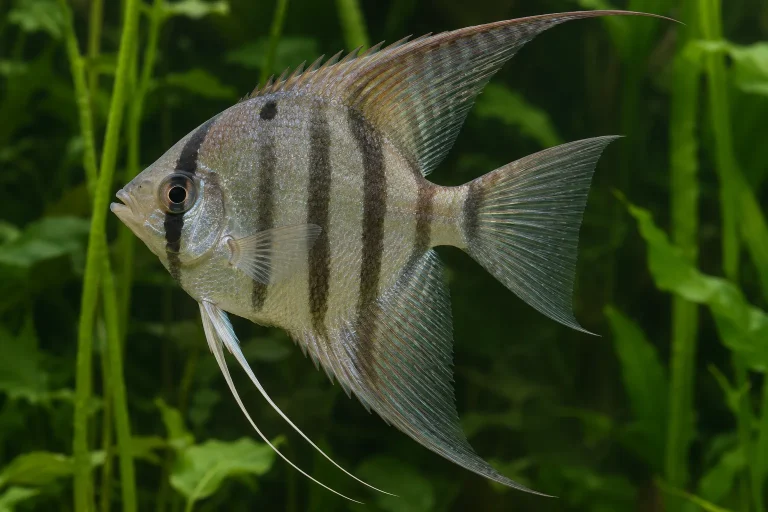
Leopold’s Angelfish
Pterophyllum leopoldi
- Care level
- Intermediate
- Adult size
- 10–15 cm
- Minimum tank
- 250 litres
- Temperature
- 25–29 °C
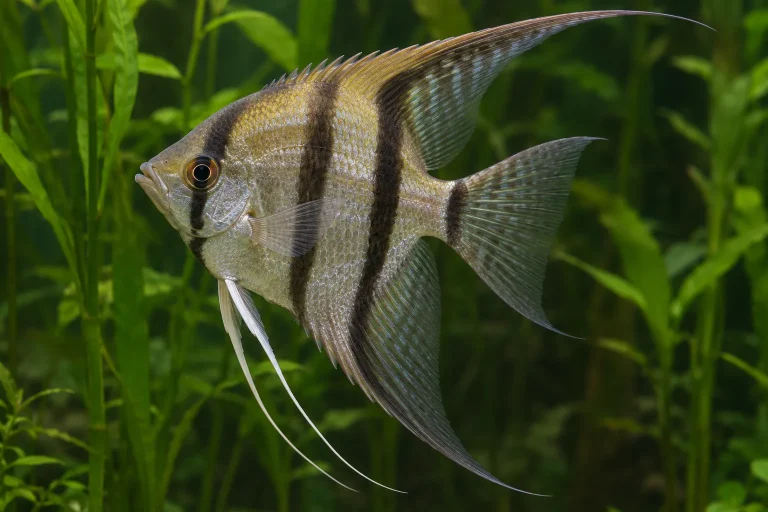
Freshwater Angelfish
Pterophyllum scalare
- Care level
- Intermediate
- Adult size
- 12–15 cm
- Minimum tank
- 200 litres
- Temperature
- 24–30 °C