
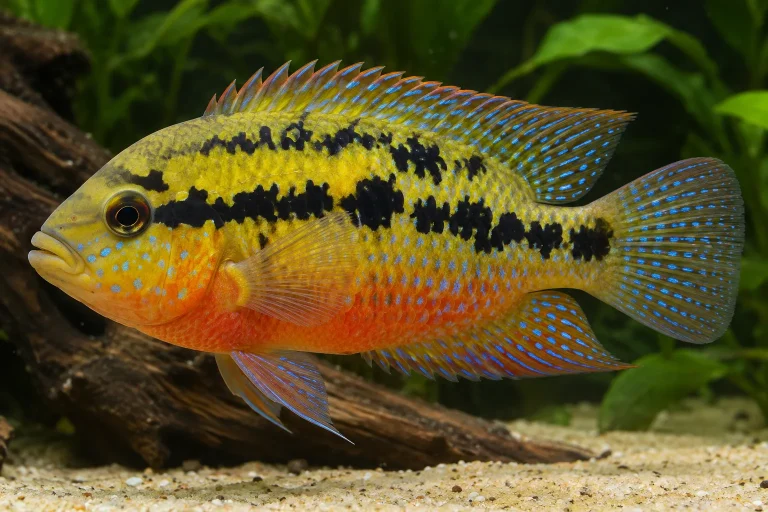
Salvini Cichlid
Trichromis salvini
- Care level
- Advanced
- Adult size
- 15–22 cm
- Minimum tank
- 250 litres
- Temperature
- 23–28 °C
Species profile
Amphilophus labiatus
Common names: Red Devil Cichlid, Red Devil
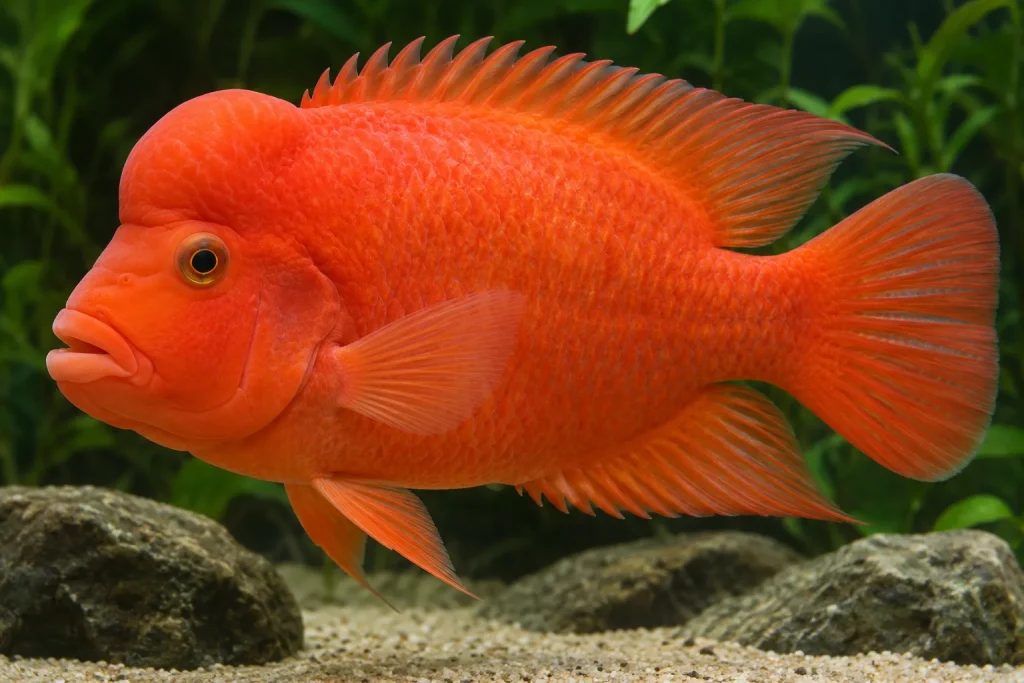
Up to 30 cm
Typical adult length 24–30 cm.

A large, intelligent and highly territorial Nicaraguan lake cichlid. It needs a spacious species-focused aquarium, secure hardscape, and an experienced keeper.
The Red Devil is a heavy-bodied cichlid with thick lips and a powerful head. Individuals may remain grey and barred or develop orange, red, yellow, white or mixed coloration, and mature males often acquire a pronounced forehead hump.
True Amphilophus labiatus can be confused with Midas cichlids and captive hybrids. Thick lips alone are not sufficient because the trait varies in captivity. Provenance, body proportions, jaw structure, and breeder records are important.
Mature males are generally larger, longer-finned and more likely to develop a substantial nuchal hump, while females tend to remain smaller and rounder. These traits overlap, so young fish and many adults cannot be sexed confidently without venting or breeding behaviour.
Use a very large, heavily filtered aquarium with open floor space, a secure lid, protected equipment and rockwork that cannot collapse. Expect persistent digging and rearrangement, which makes delicate plants and loose stacks unsuitable.
This is an extremely territorial, intelligent and interactive cichlid. A single adult may claim the entire aquarium and can direct aggression at tank mates, a partner, equipment or hands entering its territory.
Keep singly unless a proven compatible pair has ample room. Randomly paired adults may fight severely. Community housing requires public-aquarium scale and is still risky.
An adult may claim the entire aquarium. Breeding pairs defend eggs and fry with sustained attacks and can injure much larger tank mates.
Solitary keeping is often safest. Even a compatible pair requires very large quarters, visual barriers and a divider ready, while mixed cichlid setups remain risky and should not depend on other fish being able to endure repeated attacks.
The species comes from warm Nicaraguan lakes. Stable warm, well-oxygenated water and strong waste control are essential in captivity.
Some links may earn us a commission on qualifying purchases, at no extra cost to you. Check suitability, price and availability with the seller. How affiliate links work
 Manual aquarium siphon and gravel cleaner
A manual siphon for routine aquarium water changes and accessible waste removal. The seller lists a hose approximately 1.6 m long.
Control the flow and keep the intake clear of fish and delicate planting. Clean the areas appropriate for your substrate and layout rather than disturbing the entire planted bed.
 Dr. Tank tap-water conditioner – 250 ml
A tap-water conditioner option for the moderately mineralised water described in this profile. The seller states that it treats chlorine/chloramine and contains added minerals.
Use the current label instructions for the water being treated. Check the formulation against your water and stocking; this mineral-containing product is not automatically recommended for very soft-water setups.
Use a quality large-cichlid pellet as the staple and rotate crustacean, insect and other aquatic foods with some vegetable matter. Avoid mammal meat and routine feeder fish, which can create nutritional and disease problems.
Avoid feeder fish, mammalian meat, and chronic high-fat feeding. Control portions because large cichlids readily become overweight and create heavy waste.
A compatible pair is an open substrate spawner that cleans a firm surface and guards the eggs and fry. The spawning process is not especially complex, but severe aggression between partners and toward every other fish makes safe pairing and brood management an advanced task.
You can write a note about what worked for you, or send a photograph. We check everything before it appears here.
Trichromis salvini
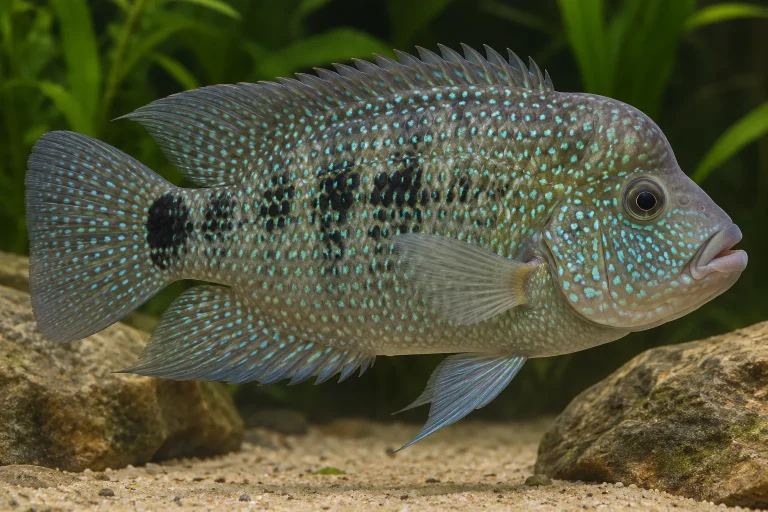
Herichthys cyanoguttatus
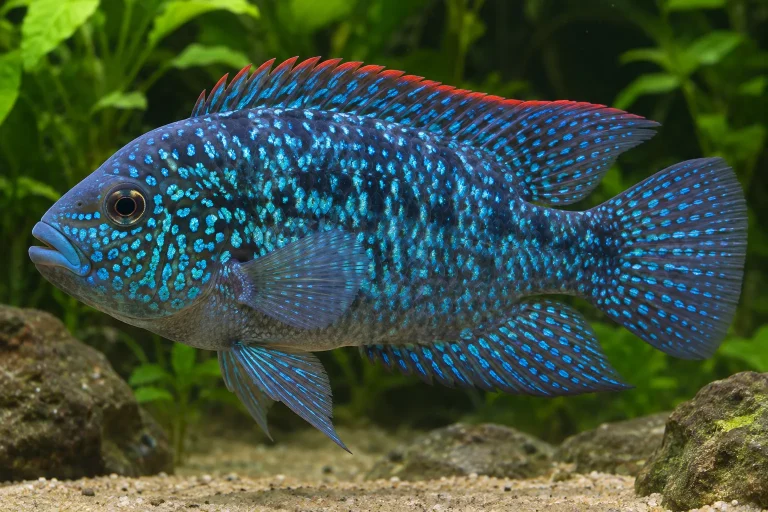
Rocio octofasciata var. "Electric Blue"
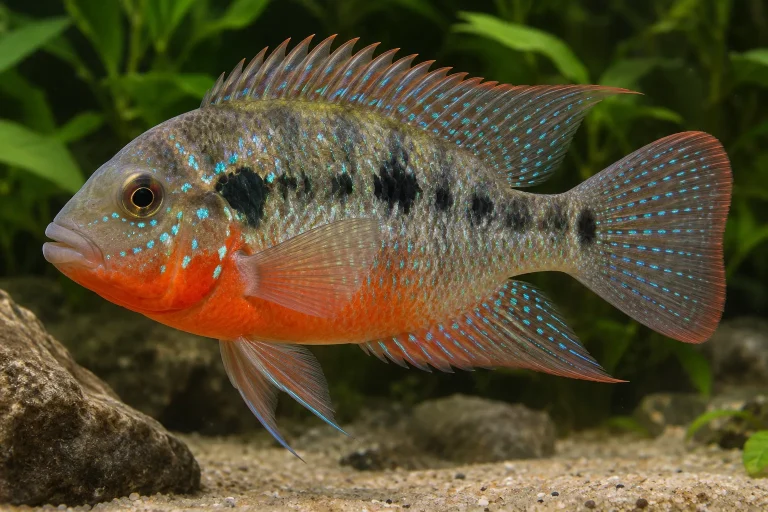
Thorichthys meeki