
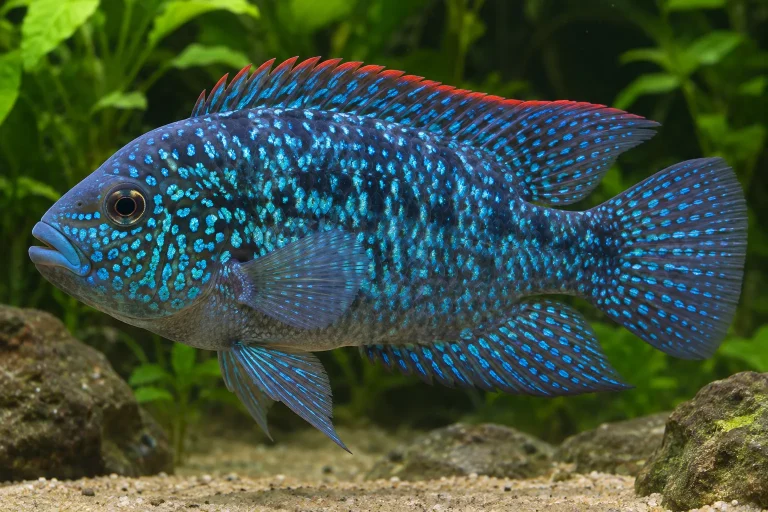
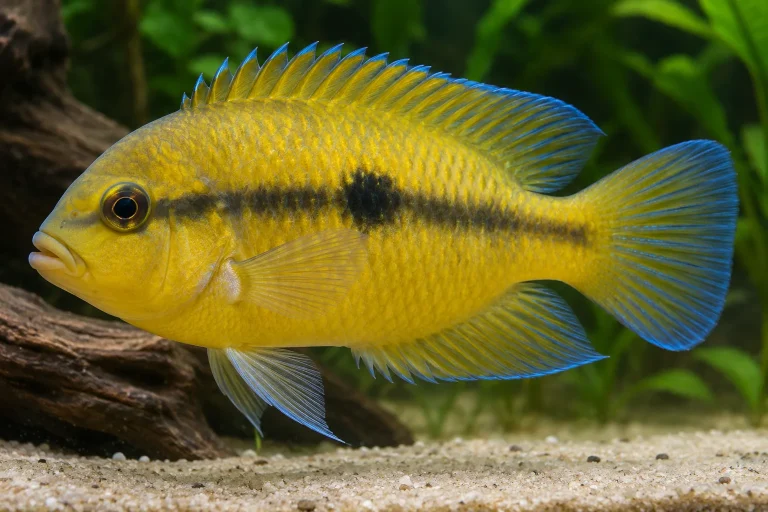
Electric Blue Jack Dempsey
Rocio octofasciata var. "Electric Blue"
- Care level
- Advanced
- Adult size
- 18–25 cm
- Minimum tank
- 250 litres
- Temperature
- 24–29 °C
Species profile
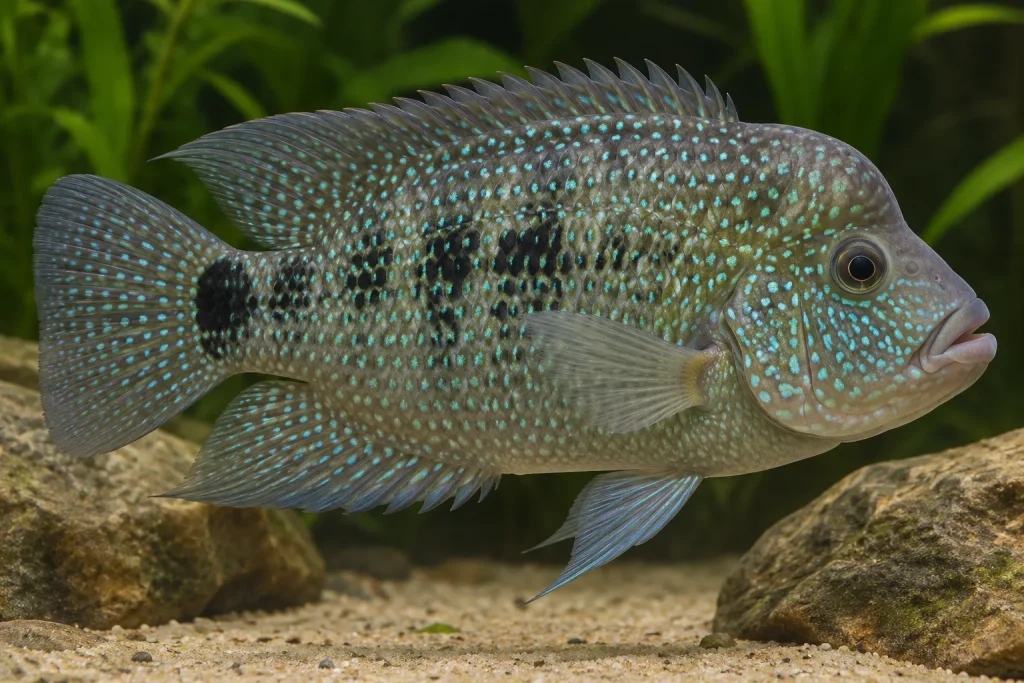
Herichthys cyanoguttatus
Common names: Texas Cichlid, Rio Grande Cichlid, Rio Grande Perch, Pearl Cichlid
Up to 30 cm
Typical adult length 20–30 cm.



A large pearly cichlid native to the lower Rio Grande system in Texas and northeastern Mexico. It is territorial, destructive, and best maintained in a large aquarium.
The Texas Cichlid is a large, deep-bodied fish covered with small pearl-like blue, green or turquoise spots over a grey, olive or golden base. Dark body and tail blotches remain visible, while breeding fish develop a much stronger black-and-pale contrast.
Correct the genus to Herichthys. True H. cyanoguttatus has fine pearl spotting and a native Rio Grande distribution. It is frequently confused with the Green Texas cichlid and commercial hybrids, so breeder provenance matters.
Mature males are usually larger, more extended in the dorsal and anal fins and more likely to develop a forehead hump. Females often remain rounder and may carry a dark dorsal-fin blotch, but these traits vary and should not be treated as certain in young fish.
Provide a large aquarium with robust filtration, sand or fine gravel, open swimming space and firmly placed rocks or wood. This species digs, moves decor and may uproot plants, so equipment and structures must be protected from a powerful adult.
Texas Cichlids are assertive, territorial and capable of severe aggression, particularly when a pair forms. They investigate and rearrange their surroundings, and a mature specimen may dominate fish that previously shared the aquarium without trouble.
Usually kept singly or as a compatible pair. A group of juveniles may be raised to allow natural pair formation, but surplus fish require separate homes.
Adults claim large areas and rearrange hardscape. A breeding pair may attack every other fish in the aquarium.
Keeping one fish or a compatible pair is the most predictable choice. Large, robust tank mates are possible only in very spacious systems with broken sight lines and a separation plan; small, timid or similarly territorial fish are poor companions.
This subtropical species tolerates a wider temperature range than many tropical cichlids. Stable neutral to moderately alkaline water with moderate mineral content is suitable.
Some links may earn us a commission on qualifying purchases, at no extra cost to you. Check suitability, price and availability with the seller. How affiliate links work
 Manual aquarium siphon and gravel cleaner
A manual siphon for routine aquarium water changes and accessible waste removal. The seller lists a hose approximately 1.6 m long.
Control the flow and keep the intake clear of fish and delicate planting. Clean the areas appropriate for your substrate and layout rather than disturbing the entire planted bed.
 Dr. Tank tap-water conditioner – 250 ml
A tap-water conditioner option for the moderately mineralised water described in this profile. The seller states that it treats chlorine/chloramine and contains added minerals.
Use the current label instructions for the water being treated. Check the formulation against your water and stocking; this mineral-containing product is not automatically recommended for very soft-water setups.
This adaptable omnivore should receive quality cichlid pellets with varied invertebrate foods and regular vegetable or algae-based foods. Feeding only rich meaty items ignores the broad natural diet and can lead to poor long-term condition.
Use a varied omnivore diet. Avoid feeder fish and mammalian meat. Control portions to reduce obesity and heavy waste production.
A pair cleans a flat rock or other firm site, lays adhesive eggs and provides strong biparental care, often moving larvae into pits. Spawning is usually achievable once a pair forms, but partner aggression, defence of the brood and the number of juveniles make management more difficult than egg laying itself.
You can write a note about what worked for you, or send a photograph. We check everything before it appears here.
Rocio octofasciata var. "Electric Blue"
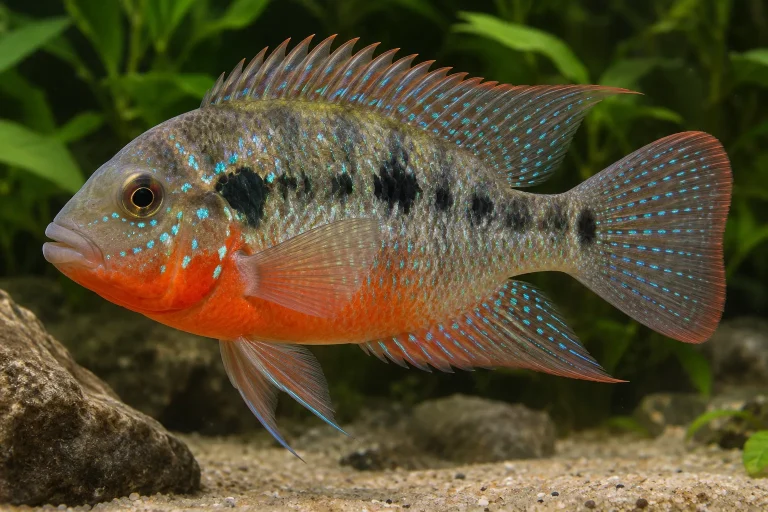
Thorichthys meeki
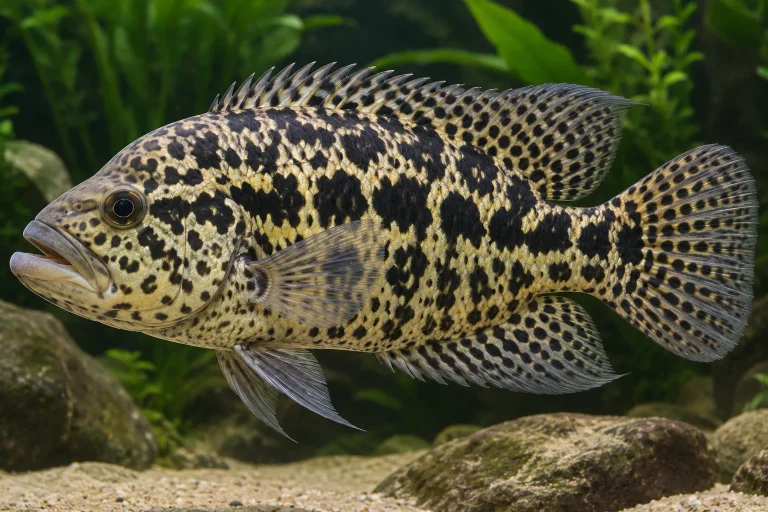
Parachromis managuensis
Herotilapia multispinosa